
सभी किताबें

पेशेवर

1 Markets I: The Ecosystem and Exchange-Traded Marketsबाज़ार ऑनलाइन 2 Markets II: Rates, FX and Creditबाज़ार ऑनलाइन 3 Markets III: Commodities, Energy and Cryptoबाज़ार ऑनलाइन 4 Quantitative Methodsविधियाँ ऑनलाइन 5 Derivatives and Volatilityडेरिवेटिव्स ऑनलाइन 6 Rates, Credit, XVA and Riskब्याज दरें, क्रेडिट और जोखिम ऑनलाइन 7 Research Craft: Predictors, Backtests, Measurement, Portfoliosअनुसंधान ऑनलाइन 8 Strategies I: Equities and Futuresरणनीतियाँ ऑनलाइन 9 Strategies II: Volatility, Relative Value, Macro and the Bank Desksरणनीतियाँ ऑनलाइन 10 Microstructure and Executionनिष्पादन ऑनलाइन 11 Market Making and High-Frequency Tradingमार्केट मेकिंग ऑनलाइन 12 Machine Learning for Marketsमशीन लर्निंग ऑनलाइन 13 Low-Latency Softwareतकनीक ऑनलाइन 14 Networks, Hardware and Trading Infrastructureतकनीक ऑनलाइन 15 Research, Data and Risk Platformsतकनीक ऑनलाइन 16 The Desk and the Firmफ़र्म ऑनलाइन 17 The Industry: Firms, Roles and Careersकरियर ऑनलाइन 18 Interviews I: Maths, Probability and Speedकरियर ऑनलाइन 19 Interviews II: Markets, Trading Games and the Final Roundकरियर ऑनलाइन 20 Interviews III: Codeकरियर ऑनलाइन
ऐप्स परिचय Coach लॉग इन पढ़ना शुरू करें

Quantitative Finance · शब्दावली

Pari passu clause क्या है?

Definition 26.4 Markets II: Rates, FX and Credit · अध्याय 26 — Distressed, Sovereign and Bank-Capital Credit

A pari passu clause states that a bond ranks equally with the issuer’s other unsecured debt of the same kind.
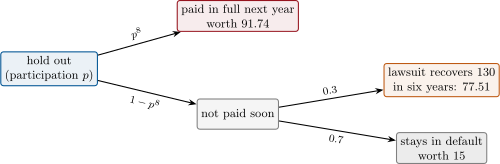
The holdout’s probability tree in the chapter’s example, values per 100 of old face discounted at 9%. The chance of being paid in full soon rises steeply with the share of creditors who tendered, since the sovereign can afford to pay a small remainder. Illustrative.
Figure 26.2. The holdout’s probability tree in the chapter’s example, values per 100 of old face discounted at 9%. The chance of being paid in full soon rises steeply with the share of creditors who tendered, since the sovereign can afford to pay a small remainder. Illustrative.
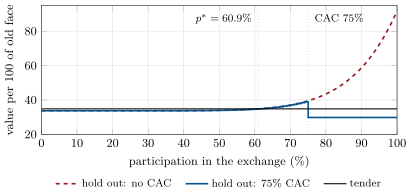
Value of holding out against the share of creditors who tender, without a collective action clause and with a 75% aggregated clause, and the value of tendering. Holding out pays above 60.9% participation; the clause removes the gain from 75%, where the holdout is bound to the offer and loses the cash paid to those who tendered. Illustrative; data: the chapter’s tutorial.
Figure 26.3. Value of holding out against the share of creditors who tender, without a collective action clause and with a 75% aggregated clause, and the value of tendering. Holding out pays above 60.9% participation; the clause removes the gain from 75%, where the holdout is bound to the offer and loses the cash paid to those who tendered. Illustrative; data: the chapter’s tutorial.

उदाहरण

Example 26.6 (Where holding out pays)

In the tree of Figure 26.2, holding out is worth 33.75 if no one tenders, 34.73 at 60% participation and 38.97 at 74%, against 34.85 for tendering. It pays from a participation of 60.9%. With a 75% aggregated clause, at 75% or more the holdout is bound and receives the new bonds alone, 29.85: the band in which holding out pays is 60.9% to 75%. Without a clause it pays at any participation above 60.9%, and at 90% it is worth 58.72 (Figure 26.3).

अध्याय में पढ़ें →