
جميع الكتب

مهني

1 Markets I: The Ecosystem and Exchange-Traded Marketsالأسواق عبر الإنترنت 2 Markets II: Rates, FX and Creditالأسواق عبر الإنترنت 3 Markets III: Commodities, Energy and Cryptoالأسواق عبر الإنترنت 4 Quantitative Methodsالأساليب عبر الإنترنت 5 Derivatives and Volatilityالمشتقات عبر الإنترنت 6 Rates, Credit, XVA and Riskالفائدة والائتمان والمخاطر عبر الإنترنت 7 Research Craft: Predictors, Backtests, Measurement, Portfoliosالبحث عبر الإنترنت 8 Strategies I: Equities and Futuresالاستراتيجيات عبر الإنترنت 9 Strategies II: Volatility, Relative Value, Macro and the Bank Desksالاستراتيجيات عبر الإنترنت 10 Microstructure and Executionالتنفيذ عبر الإنترنت 11 Market Making and High-Frequency Tradingصناعة السوق عبر الإنترنت 12 Machine Learning for Marketsتعلم الآلة عبر الإنترنت 13 Low-Latency Softwareالتكنولوجيا عبر الإنترنت 14 Networks, Hardware and Trading Infrastructureالتكنولوجيا عبر الإنترنت 15 Research, Data and Risk Platformsالتكنولوجيا عبر الإنترنت 16 The Desk and the Firmالشركة عبر الإنترنت 17 The Industry: Firms, Roles and Careersالمسارات المهنية عبر الإنترنت 18 The Interview Bookالمسارات المهنية عبر الإنترنت
التطبيقات حول المدرب تسجيل الدخول ابدأ القراءة

Quantitative Finance · المسرد

ما معنى Scenario fan-out, task granularity؟

يُعرف أيضًا باسم: scenario fan-out · task granularity

Definition 20.2 Research, Data and Risk Platforms · الفصل 20 — The Risk Grid

Scenario fan-out is the splitting of the scenarios into batches so that one trade batch’s revaluation runs as several tasks in parallel. Task granularity is the size of the resulting tasks — here the number of scenarios in a batch, the trades being grouped into batches of about half a second of pricing per scenario — which trades scheduling freedom against the fixed cost of each task.
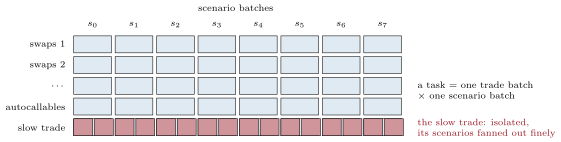
The grid as tasks: rows are trade batches grouped by estimated cost, columns scenario batches; every cell is a task. A cost-aware plan gives a trade measured slow its own row, with finer columns, so that no single task holds the window.
Figure 20.1. The grid as tasks: rows are trade batches grouped by estimated cost, columns scenario batches; every cell is a task. A cost-aware plan gives a trade measured slow its own row, with finer columns, so that no single task holds the window.
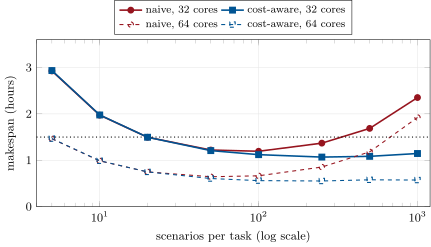
Makespan of the nightly grid on 32 cores (solid) and 64 (dashed) against the number of scenarios per task, for a plan that trusts the cost estimates (naive) and one that isolates the trade measured slow last night (cost-aware); the dotted line is the 90-minute window. Coarse tasks cannot be balanced; fine tasks drown in their fixed costs. Data: fig_riskgrid.py, with costs from bench_riskgrid.py.
Figure 20.2. Makespan of the nightly grid on 32 cores (solid) and 64 (dashed) against the number of scenarios per task, for a plan that trusts the cost estimates (naive) and one that isolates the trade measured slow last night (cost-aware); the dotted line is the 90-minute window. Coarse tasks cannot be balanced; fine tasks drown in their fixed costs. Data: fig_riskgrid.py, with costs from bench_riskgrid.py.
اقرأ في الفصل →