
جميع الكتب

مهني

1 Markets I: The Ecosystem and Exchange-Traded Marketsالأسواق عبر الإنترنت 2 Markets II: Rates, FX and Creditالأسواق عبر الإنترنت 3 Markets III: Commodities, Energy and Cryptoالأسواق عبر الإنترنت 4 Quantitative Methodsالأساليب عبر الإنترنت 5 Derivatives and Volatilityالمشتقات عبر الإنترنت 6 Rates, Credit, XVA and Riskالفائدة والائتمان والمخاطر عبر الإنترنت 7 Research Craft: Predictors, Backtests, Measurement, Portfoliosالبحث عبر الإنترنت 8 Strategies I: Equities and Futuresالاستراتيجيات عبر الإنترنت 9 Strategies II: Volatility, Relative Value, Macro and the Bank Desksالاستراتيجيات عبر الإنترنت 10 Microstructure and Executionالتنفيذ عبر الإنترنت 11 Market Making and High-Frequency Tradingصناعة السوق عبر الإنترنت 12 Machine Learning for Marketsتعلم الآلة عبر الإنترنت 13 Low-Latency Softwareالتكنولوجيا عبر الإنترنت 14 Networks, Hardware and Trading Infrastructureالتكنولوجيا عبر الإنترنت 15 Research, Data and Risk Platformsالتكنولوجيا عبر الإنترنت 16 The Desk and the Firmالشركة عبر الإنترنت 17 The Industry: Firms, Roles and Careersالمسارات المهنية عبر الإنترنت 18 The Interview Bookالمسارات المهنية عبر الإنترنت
التطبيقات حول المدرب تسجيل الدخول ابدأ القراءة

Quantitative Finance · المسرد

ما معنى Static hedging؟

Definition 15.10 Derivatives and Volatility · الفصل 15 — Barriers and Digitals

Static hedging replicates an exotic option with a portfolio of vanilla options fixed at inception, traded again only at events such as a barrier hit or expiry, rather than rebalanced continuously.
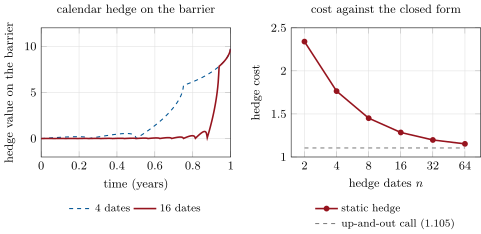
A static hedge of an up-and-out call (strike 100, barrier 120, one year, 20%) from calls of several expiries. Left: the hedge’s value on the barrier through time: zero at the dates it is built on, and large in the last interval, where the payoff jumps. Right: its cost converges to the option’s price as the dates multiply. Data: the tutorial.
Figure 15.2. A static hedge of an up-and-out call (strike 100, barrier 120, one year, 20%) from calls of several expiries. Left: the hedge’s value on the barrier through time: zero at the dates it is built on, and large in the last interval, where the payoff jumps. Right: its cost converges to the option’s price as the dates multiply. Data: the tutorial.

أمثلة

Example 15.11 (A calendar hedge of an up-and-out call)

Strike 100, barrier 120, one year, 20%, zero carry: the up-and-out call is worth 1.105. The terminal payoff is a call at 100 less a call at 120 less 20 digitals at 120. Working back over nn equally spaced dates, the desk adds calls struck at 120 of each expiry in the amounts that zero the portfolio on the barrier at each date. With 4 dates the hedge costs 1.77 and is worth up to 5.4 on the barrier between dates, over the first nine months. With 16 dates it costs 1.28 and is worth at most 0.16. With 64 it costs 1.15 (Figure 15.2). The error halves each time the dates double. The last interval before expiry is the hardest, because there the payoff on the barrier jumps from 20 to 0.

اقرأ في الفصل →