 Coach
CoachStatic hedging replicates an exotic option with a portfolio of vanilla options fixed at inception, traded again only at events such as a barrier hit or expiry, rather than rebalanced continuously.
Voorbeelden
Example 15.11 (A calendar hedge of an up-and-out call)
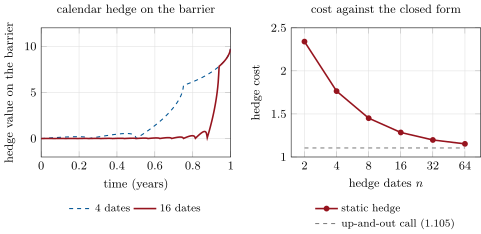
Strike 100, barrier 120, one year, 20%, zero carry: the up-and-out call is worth 1.105. The terminal payoff is a call at 100 less a call at 120 less 20 digitals at 120. Working back over equally spaced dates, the desk adds calls struck at 120 of each expiry in the amounts that zero the portfolio on the barrier at each date. With 4 dates the hedge costs 1.77 and is worth up to 5.4 on the barrier between dates, over the first nine months. With 16 dates it costs 1.28 and is worth at most 0.16. With 64 it costs 1.15 (Figure 15.2). The error halves each time the dates double. The last interval before expiry is the hardest, because there the payoff on the barrier jumps from 20 to 0.