
جميع الكتب

مهني

1 Markets I: The Ecosystem and Exchange-Traded Marketsالأسواق عبر الإنترنت 2 Markets II: Rates, FX and Creditالأسواق عبر الإنترنت 3 Markets III: Commodities, Energy and Cryptoالأسواق عبر الإنترنت 4 Quantitative Methodsالأساليب عبر الإنترنت 5 Derivatives and Volatilityالمشتقات عبر الإنترنت 6 Rates, Credit, XVA and Riskالفائدة والائتمان والمخاطر عبر الإنترنت 7 Research Craft: Predictors, Backtests, Measurement, Portfoliosالبحث عبر الإنترنت 8 Strategies I: Equities and Futuresالاستراتيجيات عبر الإنترنت 9 Strategies II: Volatility, Relative Value, Macro and the Bank Desksالاستراتيجيات عبر الإنترنت 10 Microstructure and Executionالتنفيذ عبر الإنترنت 11 Market Making and High-Frequency Tradingصناعة السوق عبر الإنترنت 12 Machine Learning for Marketsتعلم الآلة عبر الإنترنت 13 Low-Latency Softwareالتكنولوجيا عبر الإنترنت 14 Networks, Hardware and Trading Infrastructureالتكنولوجيا عبر الإنترنت 15 Research, Data and Risk Platformsالتكنولوجيا عبر الإنترنت 16 The Desk and the Firmالشركة عبر الإنترنت 17 The Industry: Firms, Roles and Careersالمسارات المهنية عبر الإنترنت 18 The Interview Bookالمسارات المهنية عبر الإنترنت
التطبيقات حول المدرب تسجيل الدخول ابدأ القراءة

Quantitative Finance · المسرد

ما معنى Stressed expected shortfall؟

Definition 23.8 Rates, Credit, XVA and Risk · الفصل 23 — Regulatory Capital for Trading Books

Stressed expected shortfall calibrates the ES to the most severe twelve-month period for the bank’s portfolio, computed on a reduced set of risk factors with a long history and scaled up by the ratio of the current ES with all factors to the current ES with the reduced set (at least one).
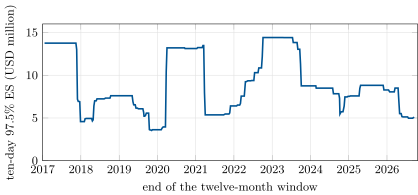
Expected shortfall of today’s book over every twelve-month window of history since 2016, by the window’s end date. The stressed calibration takes the maximum, the year to October 2022. Data: US Treasury par yields, ECB reference rates; the chapter’s tutorial.
Figure 23.2. Expected shortfall of today’s book over every twelve-month window of history since 2016, by the window’s end date. The stressed calibration takes the maximum, the year to October 2022. Data: US Treasury par yields, ECB reference rates; the chapter’s tutorial.

أمثلة

Example 23.9 (The internal-model charge)

On overlapping ten-day moves, the book’s 97.5% ES over the last year is USD 5.27 million. Scanning every twelve-month window since 2016, the most severe ends on 3 October 2022 (Figure 23.2): its ES is USD 14.41 million for the whole book, 5.67 million for rates alone and 14.01 million for FX alone. All the factors are major-currency rates and FX pairs with a ten-day liquidity horizon, so no scaling applies. The IMCC is 0.5×14.41+0.5×(5.67+14.01)=USD 17.040.5\times14.41+0.5\times(5.67+14.01) = \text{USD}~17.04 million and, with the multiplier of 1.5, the charge is USD 25.56 million, 37% of the standardised one.

اقرأ في الفصل →