 Coach
CoachThe structuring margin is the difference between a note’s issue price and the value of its components at the issuer’s own funding curve and the desk’s option prices: the revenue shared between the issuer and the distributors.
Examples
Example 19.7 (Seventy percent participation)
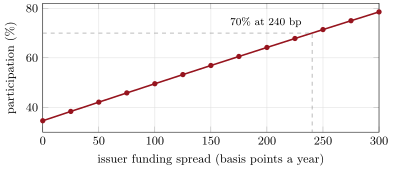
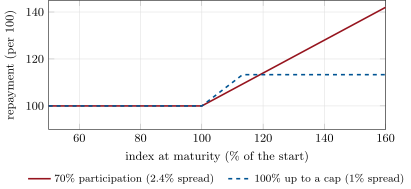
A two-year note, 100% protected, on an index with a 3% rate and a 1.5% dividend yield, at chapter 9’s two-year at-the-money volatility of 20.5%. The at-the-money call costs 12.49 per 100, and the margin is 1.5. At a zero funding spread the bond costs 94.18, leaving 4.32 for options: a participation of 34.6%. Each half point of spread adds about 7.5 points of participation. At 1% it is 49.6%, at 2% it is 64.2%, and at 2.40% the bond costs 89.76 and the participation reaches 70% (Figure 19.1).
Example 19.8 (A one-year reverse convertible)
Strike 90%, one year, the issuer’s spread 1%, the same market. The investor sells puts struck at 90%, worth 4.26, and the issuer’s funding benefit is worth 3.92. After a 1.5 margin the note pays a coupon of 6.96%, against a risk-free rate of 3%. If the index ends below 90%, the investor receives instead of par, and the coupon.