
جميع الكتب

مهني

1 Markets I: The Ecosystem and Exchange-Traded Marketsالأسواق عبر الإنترنت 2 Markets II: Rates, FX and Creditالأسواق عبر الإنترنت 3 Markets III: Commodities, Energy and Cryptoالأسواق عبر الإنترنت 4 Quantitative Methodsالأساليب عبر الإنترنت 5 Derivatives and Volatilityالمشتقات عبر الإنترنت 6 Rates, Credit, XVA and Riskالفائدة والائتمان والمخاطر عبر الإنترنت 7 Research Craft: Predictors, Backtests, Measurement, Portfoliosالبحث عبر الإنترنت 8 Strategies I: Equities and Futuresالاستراتيجيات عبر الإنترنت 9 Strategies II: Volatility, Relative Value, Macro and the Bank Desksالاستراتيجيات عبر الإنترنت 10 Microstructure and Executionالتنفيذ عبر الإنترنت 11 Market Making and High-Frequency Tradingصناعة السوق عبر الإنترنت 12 Machine Learning for Marketsتعلم الآلة عبر الإنترنت 13 Low-Latency Softwareالتكنولوجيا عبر الإنترنت 14 Networks, Hardware and Trading Infrastructureالتكنولوجيا عبر الإنترنت 15 Research, Data and Risk Platformsالتكنولوجيا عبر الإنترنت 16 The Desk and the Firmالشركة عبر الإنترنت 17 The Industry: Firms, Roles and Careersالمسارات المهنية عبر الإنترنت 18 The Interview Bookالمسارات المهنية عبر الإنترنت
التطبيقات حول المدرب تسجيل الدخول ابدأ القراءة

Quantitative Finance · المسرد

ما معنى Structuring margin؟

Definition 19.6 Derivatives and Volatility · الفصل 19 — The Structured-Products Business

The structuring margin is the difference between a note’s issue price and the value of its components at the issuer’s own funding curve and the desk’s option prices: the revenue shared between the issuer and the distributors.
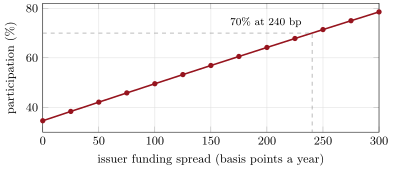
The participation a two-year 100%-protected note can offer, after a 1.5% margin, against the issuer’s funding spread (rate 3%, dividend yield 1.5%, chapter 9’s two-year volatility). The spread, not the option, sets the participation: without it the note could offer 35%. Data: the tutorial.
Figure 19.1. The participation a two-year 100%-protected note can offer, after a 1.5% margin, against the issuer’s funding spread (rate 3%, dividend yield 1.5%, chapter 9’s two-year volatility). The spread, not the option, sets the participation: without it the note could offer 35%. Data: the tutorial.
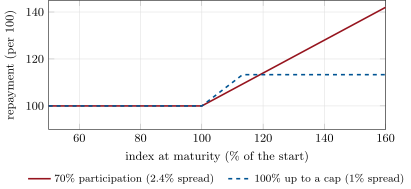
Two two-year 100%-protected notes that each cost the client 100: 70% participation without a cap, which needs a 2.4% funding spread, and full participation capped at 113.3%, which a 1% spread pays for. Data: the tutorial.
Figure 19.2. Two two-year 100%-protected notes that each cost the client 100: 70% participation without a cap, which needs a 2.4% funding spread, and full participation capped at 113.3%, which a 1% spread pays for. Data: the tutorial.

أمثلة

Example 19.7 (Seventy percent participation)

A two-year note, 100% protected, on an index with a 3% rate and a 1.5% dividend yield, at chapter 9’s two-year at-the-money volatility of 20.5%. The at-the-money call costs 12.49 per 100, and the margin is 1.5. At a zero funding spread the bond costs 94.18, leaving 4.32 for options: a participation of 34.6%. Each half point of spread adds about 7.5 points of participation. At 1% it is 49.6%, at 2% it is 64.2%, and at 2.40% the bond costs 89.76 and the participation reaches 70% (Figure 19.1).

Example 19.8 (A one-year reverse convertible)

Strike 90%, one year, the issuer’s spread 1%, the same market. The investor sells 100/0.9100/0.9 puts struck at 90%, worth 4.26, and the issuer’s funding benefit is worth 3.92. After a 1.5 margin the note pays a coupon of 6.96%, against a risk-free rate of 3%. If the index ends below 90%, the investor receives 100 ST/(0.9 S0)100\,S_T/(0.9\,S_0) instead of par, and the coupon.

اقرأ في الفصل →