
সব বই

পেশাদার

1 Markets I: The Ecosystem and Exchange-Traded Marketsবাজার অনলাইন 2 Markets II: Rates, FX and Creditবাজার অনলাইন 3 Markets III: Commodities, Energy and Cryptoবাজার অনলাইন 4 Quantitative Methodsপদ্ধতি অনলাইন 5 Derivatives and Volatilityডেরিভেটিভস অনলাইন 6 Rates, Credit, XVA and Riskসুদহার, ঋণ ও ঝুঁকি অনলাইন 7 Research Craft: Predictors, Backtests, Measurement, Portfoliosগবেষণা অনলাইন 8 Strategies I: Equities and Futuresকৌশল অনলাইন 9 Strategies II: Volatility, Relative Value, Macro and the Bank Desksকৌশল অনলাইন 10 Microstructure and Executionএক্সিকিউশন অনলাইন 11 Market Making and High-Frequency Tradingমার্কেট মেকিং অনলাইন 12 Machine Learning for Marketsমেশিন লার্নিং অনলাইন 13 Low-Latency Softwareপ্রযুক্তি অনলাইন 14 Networks, Hardware and Trading Infrastructureপ্রযুক্তি অনলাইন 15 Research, Data and Risk Platformsপ্রযুক্তি অনলাইন 16 The Desk and the Firmপ্রতিষ্ঠান অনলাইন 17 The Industry: Firms, Roles and Careersক্যারিয়ার অনলাইন 18 Interviews I: Maths, Probability and Speedক্যারিয়ার অনলাইন 19 Interviews II: Markets, Trading Games and the Final Roundক্যারিয়ার অনলাইন 20 Interviews III: Codeক্যারিয়ার অনলাইন
অ্যাপ পরিচিতি Coach সাইন ইন পড়া শুরু করো

বইগুলো এখনো বাংলা ভাষায় পাওয়া যায় না — ইংরেজি সংস্করণ দেখানো হচ্ছে।

Quantitative Finance · পরিভাষা

UCITS, separately managed account কী?

অন্য নাম: UCITS · separately managed account

Definition 4.3 The Desk and the Firm · অধ্যায় 4 — The Asset Manager and the Fund

A UCITS is a fund authorised under the European Union’s directive on undertakings for collective investment in transferable securities: it may be sold to the public across the Union, and in exchange it must invest within eligible assets and diversification limits and redeem its units at any investor’s request, suspending only in exceptional cases. A separately managed account is a portfolio held in one investor’s own name and managed under an investment management agreement, outside any pooled fund.
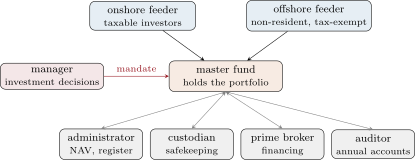
A master–feeder hedge fund. Investors buy into the feeder built for them; the feeders invest in the master, which holds the portfolio. The manager decides; the administrator computes the net asset value and keeps the register, the custodian holds the assets, the prime broker finances the positions, and the auditor signs the accounts.
Figure 4.1. A master–feeder hedge fund. Investors buy into the feeder built for them; the feeders invest in the master, which holds the portfolio. The manager decides; the administrator computes the net asset value and keeps the register, the custodian holds the assets, the prime broker finances the positions, and the auditor signs the accounts.
প্রসঙ্গসহ পড়ো →