 Coach
CoachWrong-way risk is a positive dependence between a counterparty’s probability of default and the bank’s exposure to it: the exposure is largest when default is likeliest. It is specific when the dependence is built into the trade (protection bought from a counterparty on itself or on its own country) and general when it comes through common market factors.
Examples
Example 17.12 (A counterparty that weakens with the euro)
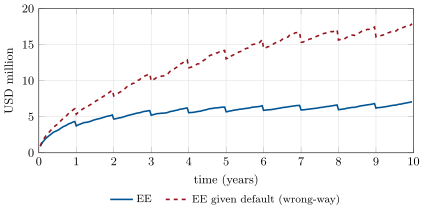
Let the counterparty of the cross-currency swap have a hazard rate of : a 10% fall of the euro below its forward raises its hazard by about 70%. The bank’s exposure is largest when the euro has fallen. Weighting the paths by the probability of default in each period, the expected exposure conditional on default is 2.52 times the unconditional EE at its peak, and 2.22 times on average over the life (Figure 17.5).