Coach
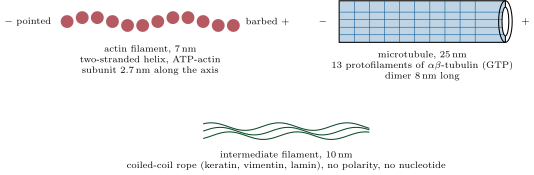
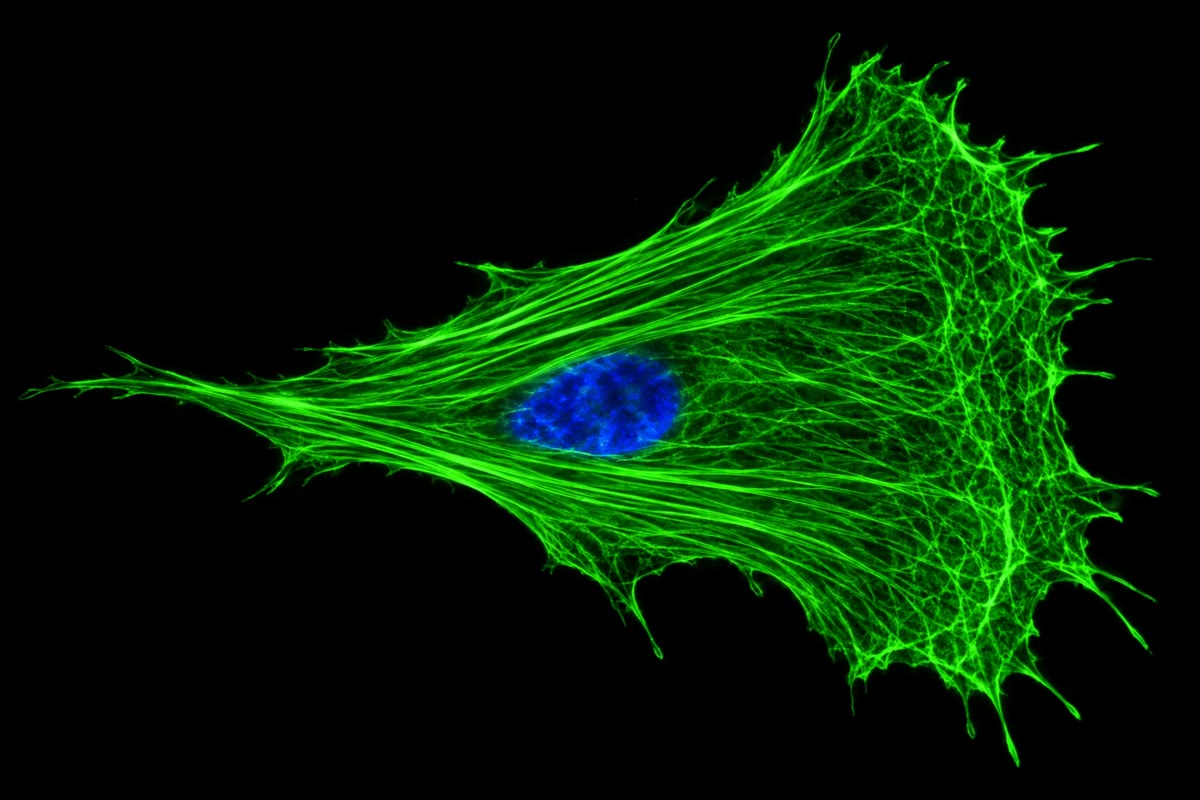
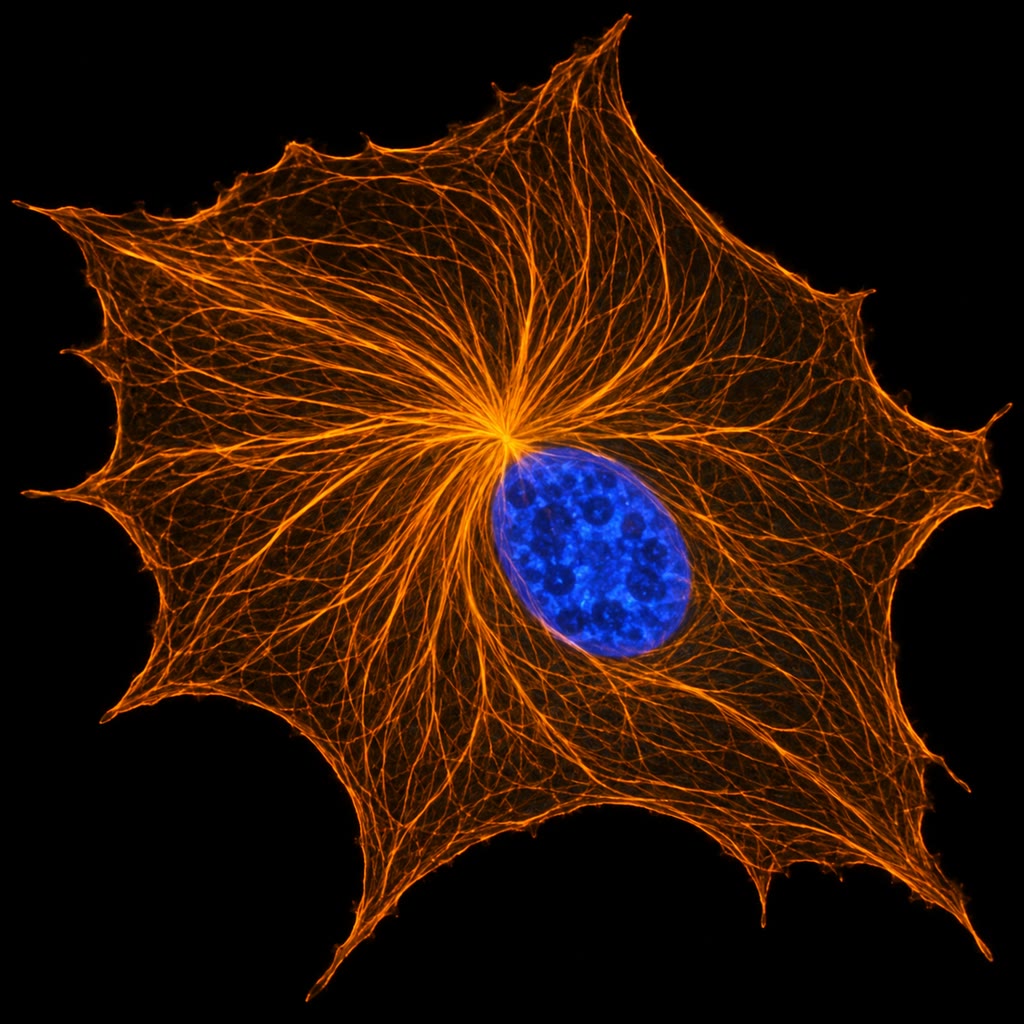
CoachAn actin filament is a two-stranded helical polymer of globular actin, thick, each subunit along the axis, polar: the barbed (plus) end grows faster than the pointed (minus) end, and each subunit carries an ATP that is hydrolysed after incorporation. A microtubule is a hollow tube of outer diameter built from thirteen protofilaments of -tubulin dimers ( per dimer), also polar, its plus end growing faster and its minus end usually anchored at the centrosome near the nucleus; the subunit hydrolyses its GTP after incorporation. An intermediate filament is a rope of made of coiled-coil proteins (keratins in epithelia, vimentin in mesenchyme, neurofilaments in axons, lamins under the nuclear envelope), apolar, without nucleotide, and far more stable — a tension-bearing cable rather than a dynamic track. Actin sits mostly under the plasma membrane and in protrusions; microtubules radiate from the centrosome and serve as the tracks of long-range transport and as the spindle; intermediate filaments give a cell and its nucleus their mechanical resilience.