 Coach
CoachThe habitat of an animal is the kind of place where it naturally lives and finds everything it needs: food, water, shelter, and a safe spot for its young. The pond, the forest, the meadow, the hedge and the seashore are habitats.
Examples
Example 11.2 (Four habitats, four neighborhoods)
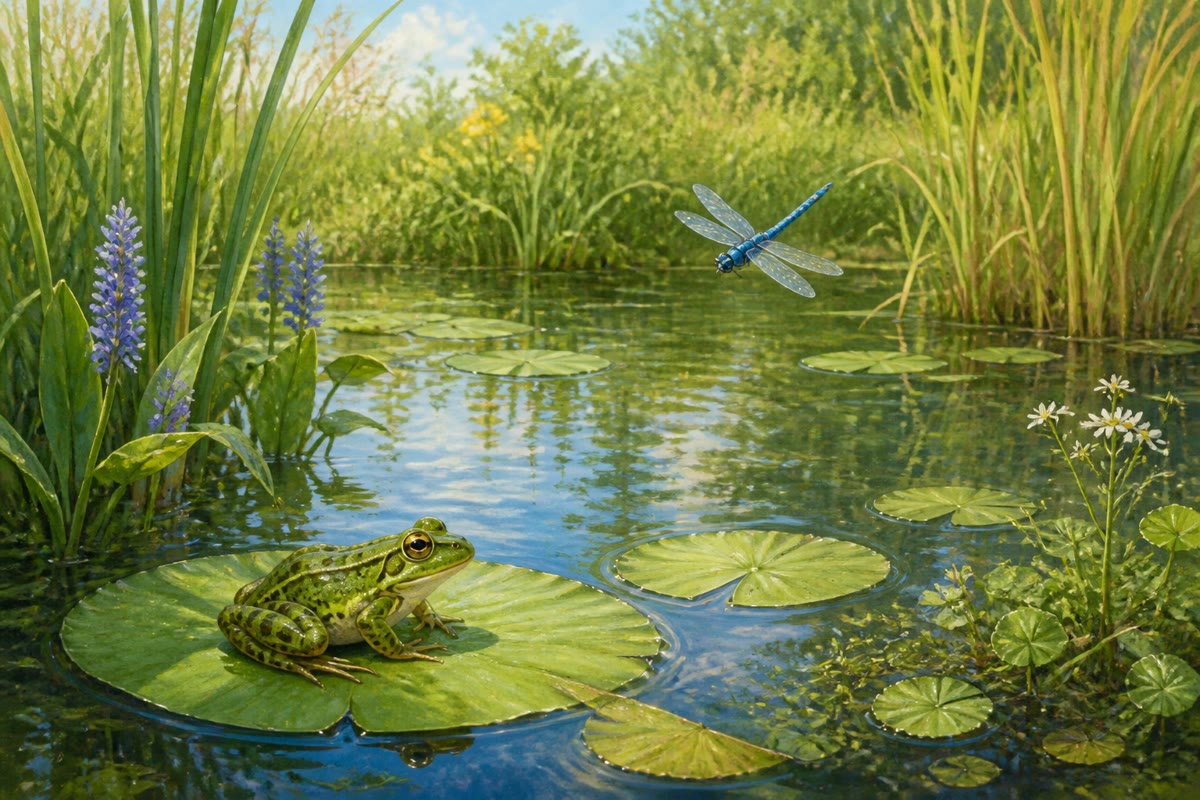
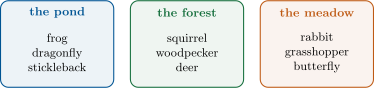
In the pond: frogs, dragonflies, sticklebacks, pond snails. In the forest: squirrels, deer, woodpeckers, wood ants. In the meadow: rabbits, grasshoppers, butterflies, field mice. Under the stones of an old wall: woodlice, spiders, sometimes a lizard sunning itself on top.
Example 11.5 (The mole’s equipment)
The mole lives underground, in tunnels it digs beneath the meadow. Its hands are wide digging shovels, its fur lies flat in both directions so soil never ruffles it, and its weak eyes hardly matter in the dark. Above ground it is clumsy; in its own habitat it is a champion.
Example 11.8 (The school pond)
A school digs a small pond in a corner of the yard. Within two years, dragonflies patrol it, pond skaters walk on it, and frogs have moved in — nobody brought them. Make the habitat, and the inhabitants find it.