 Coach
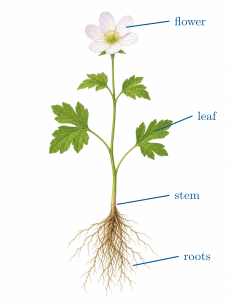
CoachA flowering plant has four main parts:
Examples
Example 3.5 (Pulling up a weed)
Pull a weed gently out of loose, wet earth and you bring up the hidden part: a tuft of pale roots, sometimes longer than the whole green plant above. Now the plant can be read from bottom to top: roots, stem, leaves — and, if you are lucky, a flower.
Example 3.7 (The chestnut tree)
The chestnut tree in the yard has the same plan as the daisy, but bigger and harder: roots under the ground, a trunk instead of a soft stem, branches with thousands of leaves, and in spring, flowers. The daisy lives one year; the chestnut can live longer than a hundred.
Example 3.9 (The forgotten plant)
Forget to water the classroom plant before the holidays: its leaves hang down, soft and sad — it wilts. Water it, and a few hours later the leaves stand up again. Water was the missing need.