All books

Professional

Apps About Coach Log in Start reading

Chemistry · Glossary

What is Chemical families?

Also known as: chemical family · alkali metal · halogen · noble gas

Definition 23.6 School Chemistry — Grades 1 to 12 · Chapter 23 — Electron Shells and the Periodic Table

A chemical family is a group of the periodic table whose elements share their main chemical properties. Three families are named: the alkali metals (group 1 except hydrogen: lithium, sodium, potassium…), soft metals that react strongly with water; the halogens (group 17: fluorine, chlorine, bromine, iodine), coloured, reactive non-metals; and the noble gases (group 18: helium, neon, argon…), which hardly react with anything.
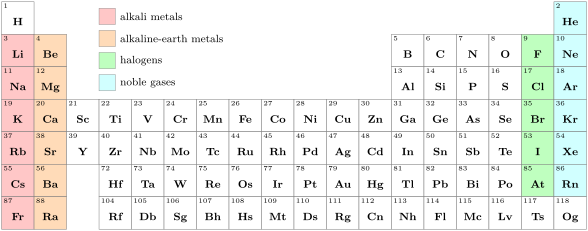
Families of the periodic table: alkali metals, alkaline-earth metals (group 2), halogens and noble gases.
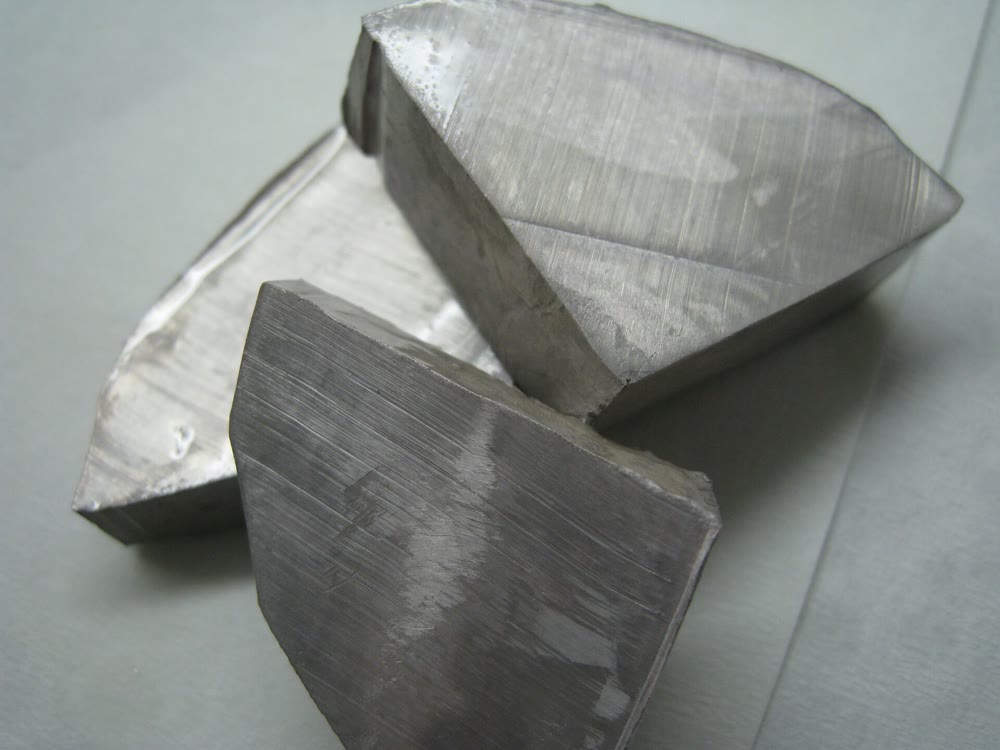
Sodium, an alkali metal, cut with a knife: soft and silvery when fresh, it dulls at once in air. Photo: Dnn87, CC BY-SA 3.0.
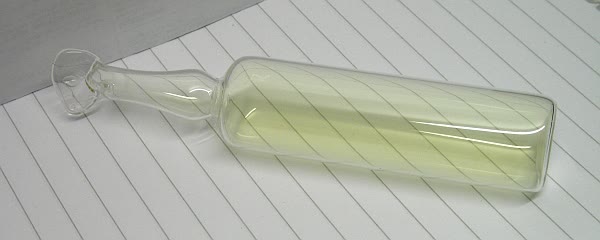
Chlorine, a halogen: a yellow-green gas, here sealed in a glass ampoule. Photo: W. Oelen, CC BY-SA 3.0.
Read in context →