 Coach
CoachAir is the mixture of gases that surrounds the Earth. It is not one single gas: several gases are mixed in it, and they can be separated from one another.
Examples
Example 4.5 (One hundred bottles of air)
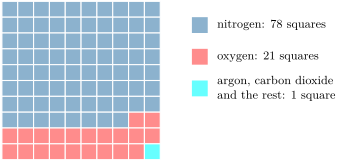
Imagine 100 bottles of dry air, and the gases of the air sorted into separate bottles. About 78 bottles would hold nitrogen, 21 bottles oxygen, and the last bottle argon, with a few drops’ worth of carbon dioxide and other gases.
Example 4.1 (An upturned glass)
A dry paper tissue is pushed to the bottom of an empty glass. The glass is turned upside down and pushed straight down into a bowl of water. When it is lifted out again, the tissue is still dry. The glass was not empty: it was full of air, and the air kept the water out.
Example 4.8 (A crowded room)
In a small classroom with the windows shut, thirty people breathe out carbon dioxide all morning. Little by little the air of the room holds less oxygen and more carbon dioxide, and people feel tired. Opening the windows brings fresh air back in.