全部书籍

专业

应用 关于 Coach 登录 开始阅读

书籍暂未推出简体中文版——当前显示英文版。

Earth and Space Sciences · 术语表

什么是 Foliation; schistosity?

又称: foliation · schistosity

Definition 21.8 High School Earth and Space Sciences · 第 21 章 — Metamorphic Rocks

A foliation is a set of parallel planes in a metamorphic rock, made by the alignment of its flat or elongated minerals; the rock splits most easily along them. Schistosity is the foliation of a schist, in which the aligned crystals of mica are big enough to be seen.
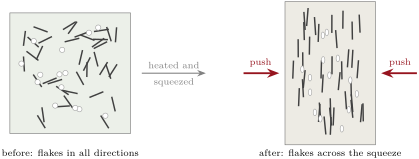
Foliation forming. Left: a mud with flakes of clay (black) and grains of quartz (white) lying in all directions. Right: squeezed from the sides while it is heated, the rock grows flakes of mica across the push and flattens its grains: it now splits along vertical planes.
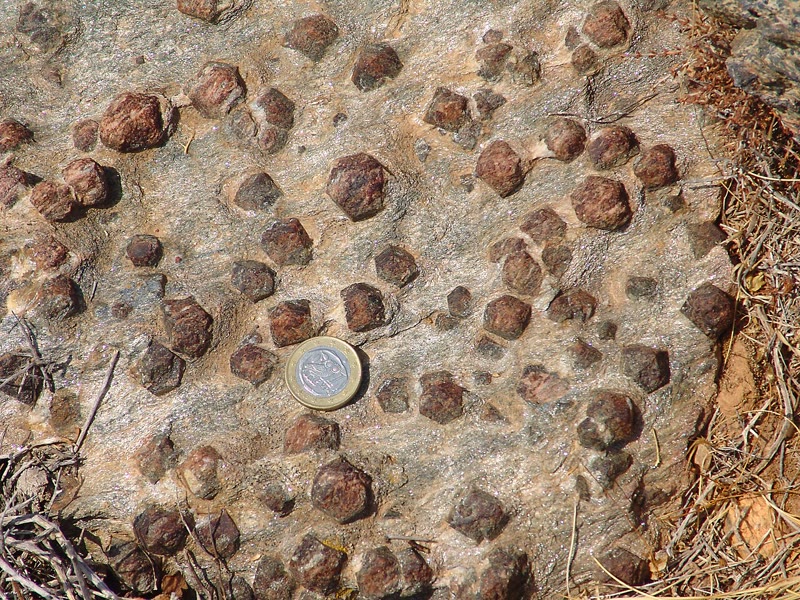
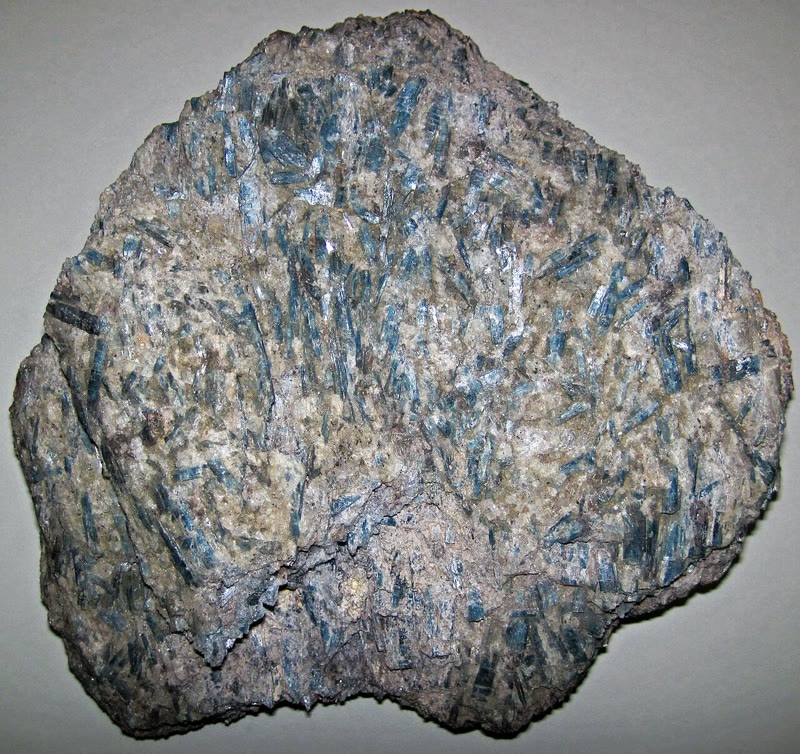
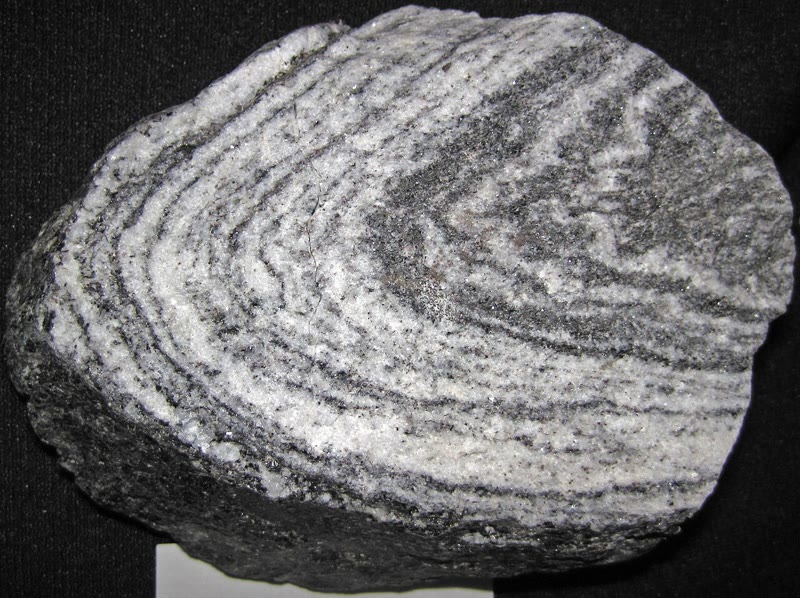
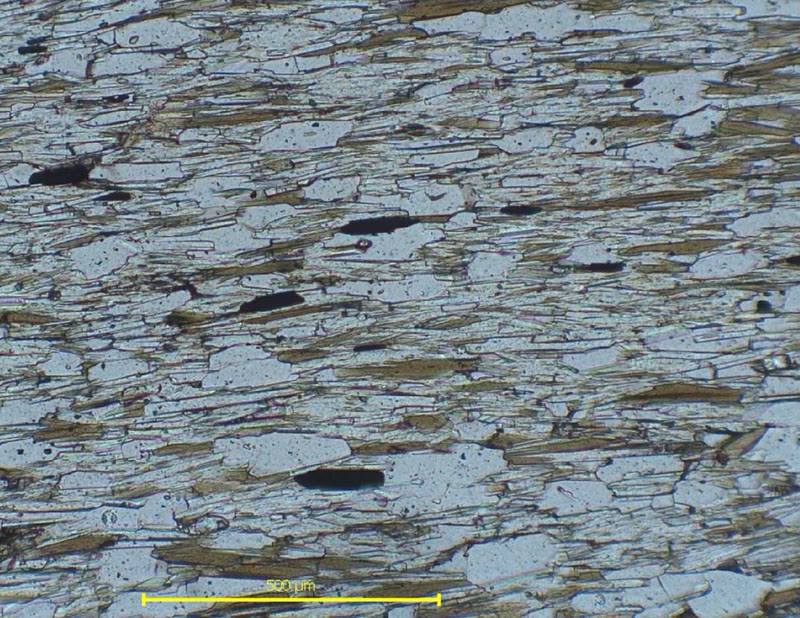
Top left: a slate under the microscope (the yellow bar is 500\, µ m): its flakes of mica all lie the same way. Top right: a garnet mica schist on the island of Syros; the coin is 23\, mm across. Bottom left: a schist with blue blades of kyanite. Bottom right: a gneiss with bands of quartz (light) and of biotite mica (dark). Photographs Geoloshe (CC0), Graeme Churchard (CC BY 2.0) and James St. John (CC BY 2.0). Top left: a slate under the microscope (the yellow bar is 500\, µ m): its flakes of mica all lie the same way. Top right: a garnet mica schist on the island of Syros; the coin is 23\, mm across. Bottom left: a schist with blue blades of kyanite. Bottom right: a gneiss with bands of quartz (light) and of biotite mica (dark). Photographs Geoloshe (CC0), Graeme Churchard (CC BY 2.0) and James St. John (CC BY 2.0). Top left: a slate under the microscope (the yellow bar is 500\, µ m): its flakes of mica all lie the same way. Top right: a garnet mica schist on the island of Syros; the coin is 23\, mm across. Bottom left: a schist with blue blades of kyanite. Bottom right: a gneiss with bands of quartz (light) and of biotite mica (dark). Photographs Geoloshe (CC0), Graeme Churchard (CC BY 2.0) and James St. John (CC BY 2.0). Top left: a slate under the microscope (the yellow bar is 500\, µ m): its flakes of mica all lie the same way. Top right: a garnet mica schist on the island of Syros; the coin is 23\, mm across. Bottom left: a schist with blue blades of kyanite. Bottom right: a gneiss with bands of quartz (light) and of biotite mica (dark). Photographs Geoloshe (CC0), Graeme Churchard (CC BY 2.0) and James St. John (CC BY 2.0).
Top left: a slate under the microscope (the yellow bar is 500 µm500\,\text{µ}\mathrm{m}): its flakes of mica all lie the same way. Top right: a garnet mica schist on the island of Syros; the coin is 23 mm23\,\mathrm{mm} across. Bottom left: a schist with blue blades of kyanite. Bottom right: a gneiss with bands of quartz (light) and of biotite mica (dark). Photographs Geoloshe (CC0), Graeme Churchard (CC BY 2.0) and James St. John (CC BY 2.0).
在原文中阅读 →