全部书籍

专业

应用 关于 Coach 登录 开始阅读

书籍暂未推出简体中文版——当前显示英文版。

Earth and Space Sciences · 术语表

什么是 Ice sheet, ice shelf and iceberg?

又称: ice sheet · ice shelf · iceberg

Definition 27.3 Primary & Middle School Earth and Space Sciences · 第 27 章 — Ice on Earth

An ice sheet is a mass of ice covering more than 50 000 km250\,000\,\mathrm{km}^{2} of land, like a huge dome that spreads outwards in all directions. Where ice flowing off the land reaches the sea and goes on floating on it, still joined to the ice behind it, it forms an ice shelf. An iceberg is a large block of ice, more than 5 m5\,\mathrm{m} across, that has broken off a glacier or an ice shelf and floats in the sea.
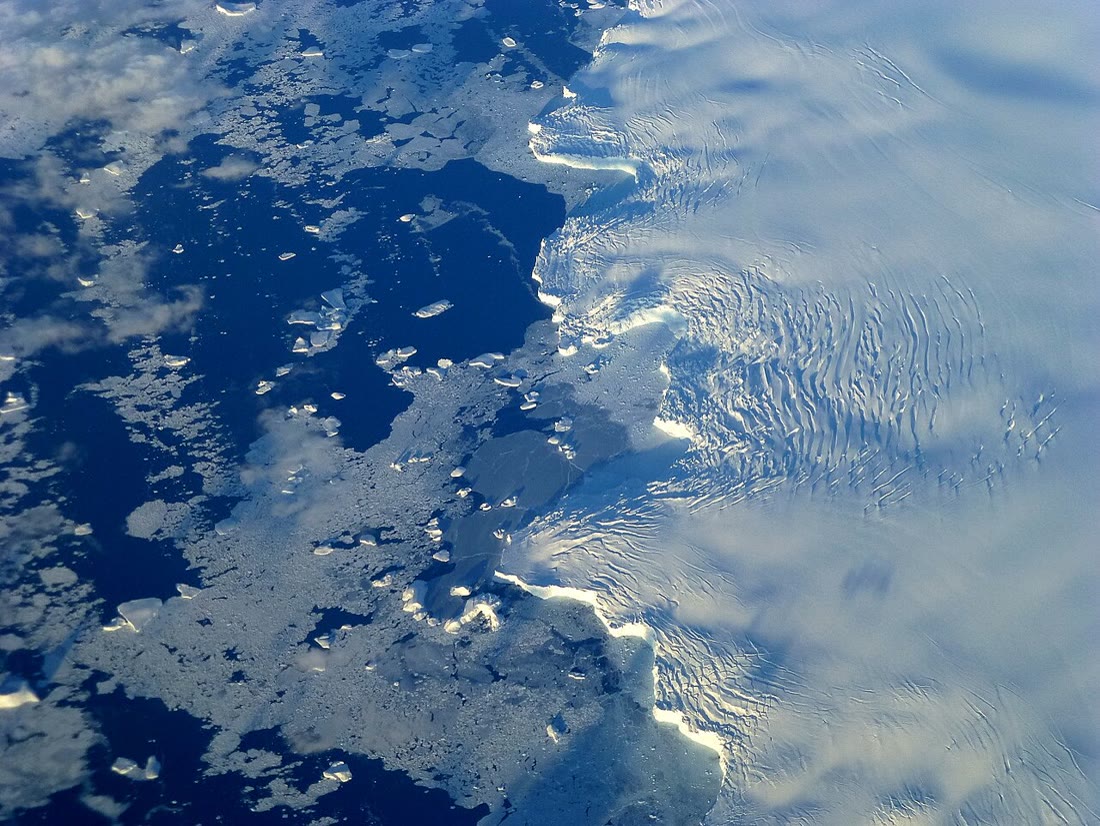
The edge of an ice shelf near Adelaide Island, off the Antarctic Peninsula, seen from an aircraft on 28 October 2012. The thick, wrinkled white ice on the right is the ice shelf; on the left, broken pieces of thinner sea ice float on the dark water. NASA, Operation IceBridge (public domain, via Wikimedia Commons).
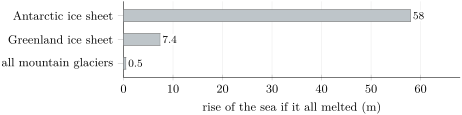
How much the sea would rise if each kind of land ice melted completely (values from the National Snow and Ice Data Center; the glaciers’ value is an upper limit, “just under half a metre”).
在原文中阅读 →