
All books

Professional

Apps About Coach Log in Start reading

Earth and Space Sciences · Glossary

What is Intertropical convergence zone?

Definition 28.15 University Earth and Space Sciences — Year 1 · Chapter 28 — The General Circulation of the Atmosphere

The intertropical convergence zone (ITCZ) is the belt near the equator where the north-easterly and south-easterly trade winds converge, forming an often continuous band of cloud and thunderstorms. It is the rising branch of the two Hadley cells; the light winds of its surface are the doldrums of the sailors.
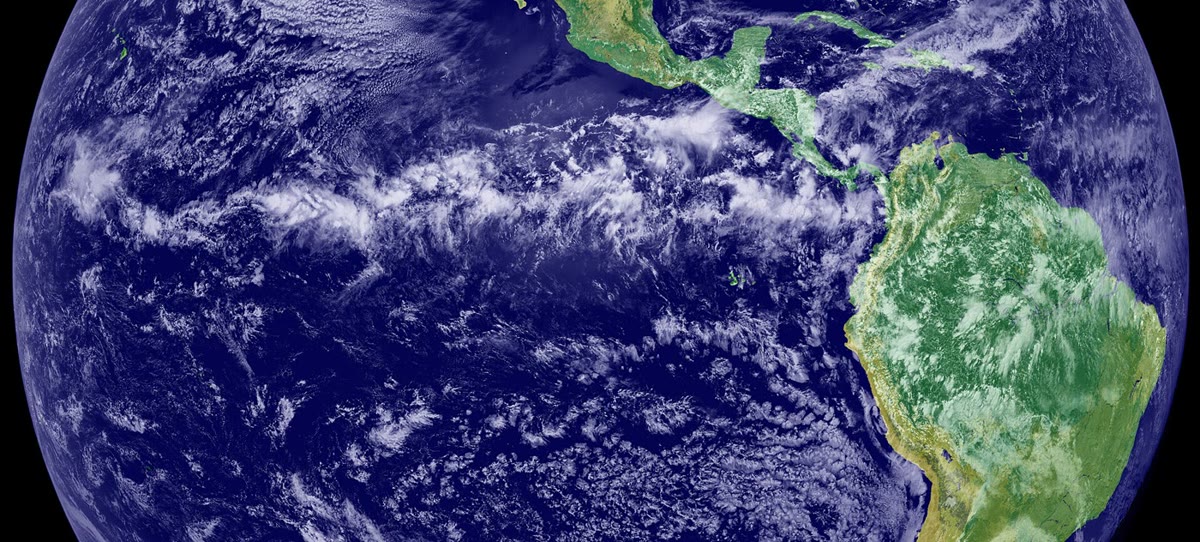
The intertropical convergence zone over the eastern Pacific: a line of bright clouds crossing the ocean north of the equator, with Central and South America to the right. The image combines cloud data from the GOES-11 geostationary satellite with colours of the land cover. (NASA Earth Observatory, public domain, via Wikimedia Commons.)
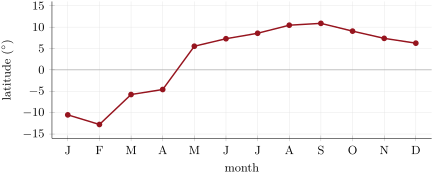
The latitude of the zonal-mean precipitation maximum, month by month, between 20 S and 20 N: the intertropical convergence zone migrates north in the northern summer and south in the southern summer, two or three months behind the Sun. NCEP-NCAR Reanalysis 1, means 1991–2020, data provided by the NOAA PSL.
The latitude of the zonal-mean precipitation maximum, month by month, between 20∘20{}^{\circ} S and 20∘20{}^{\circ} N: the intertropical convergence zone migrates north in the northern summer and south in the southern summer, two or three months behind the Sun. NCEP-NCAR Reanalysis 1, means 1991–2020, data provided by the NOAA PSL.
Read in context →