 Coach
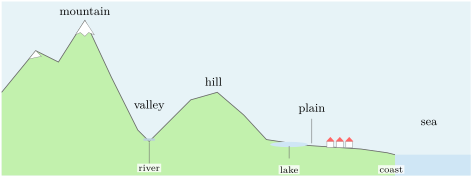
A landform is a shape of the land’s surface.
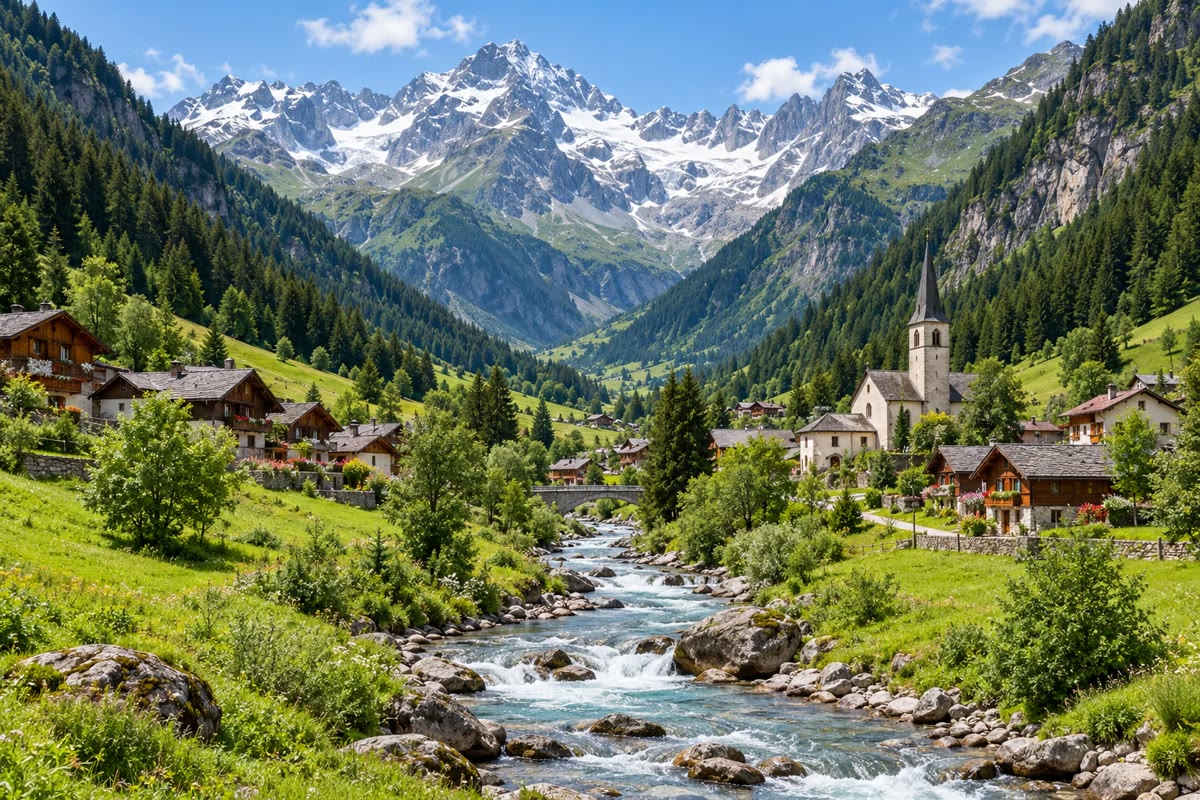
- A mountain is a very high landform with steep slopes; its top is called the summit. The highest mountains have snow on top even in summer.
- A hill is a landform that rises above the land around it, lower and rounder than a mountain.
- A valley is a long, low hollow between hills or mountains; there is often a river at the bottom.
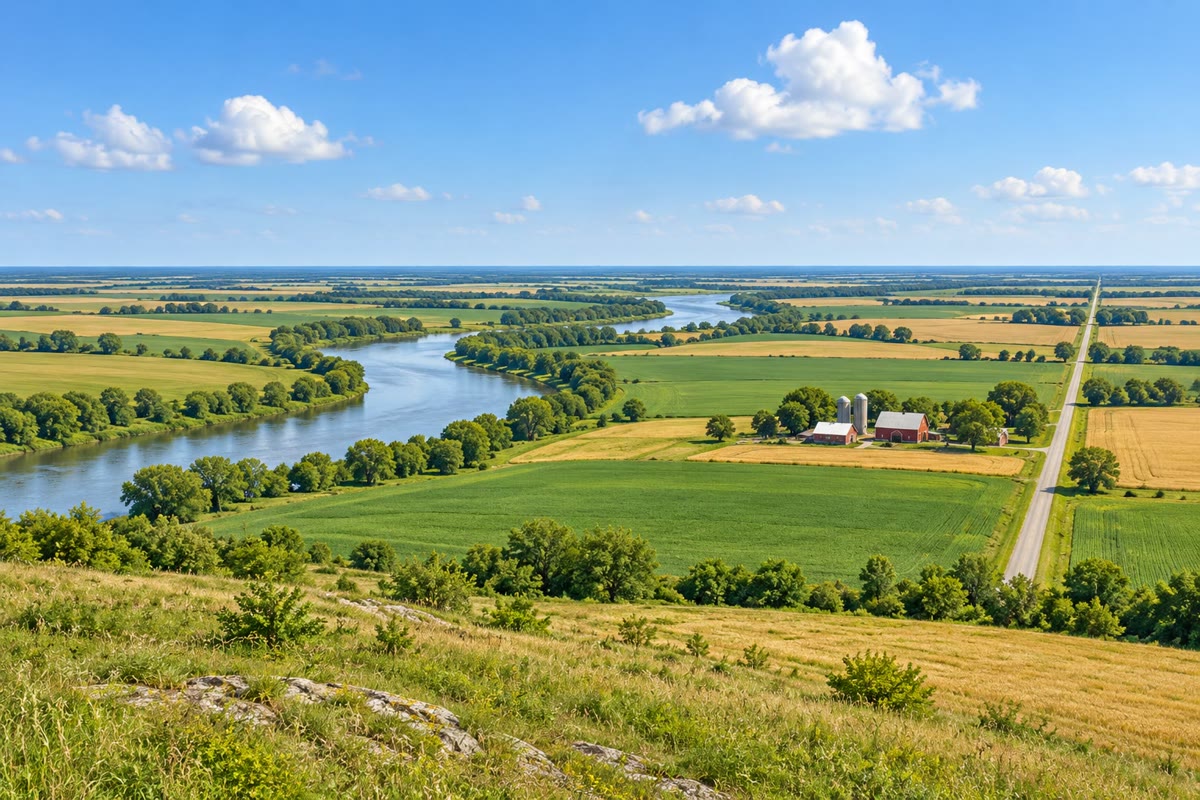
- A plain is a wide, flat, low stretch of land.
示例
Example 2.3 (Mountain or hill?)
There is no exact height at which a hill becomes a mountain. We look at the shape: a mountain is high and steep, often rocky, sometimes with snow on top; a hill is lower and rounder, often covered with grass, fields or woods, and we can walk to its top in a short time.
Example 2.7 (Town and countryside)
In a town, almost everything we see was built: streets, houses, shops, bridges, parks. In the countryside we see mostly fields, woods and meadows, with a few farms and villages. Both are landscapes. Even in the middle of a big town the shapes of the land are still there: a river crosses the town, and some streets climb up a hill.
Example 2.9 (Mia’s landscape)
In the foreground, the grass at the top of the hill. In the middle ground, a valley with a river, a bridge and a village, fields around it, and a forest on the next hill. In the background, a plain and, at the end of the land, the coast and the sea. Natural: the hills, the valley, the river, the forest, the sea. Built: the village, the church, the bridge, the fields.