সব বই

পেশাদার

1 Markets I: The Ecosystem and Exchange-Traded Marketsবাজার অনলাইন 2 Markets II: Rates, FX and Creditবাজার অনলাইন 3 Markets III: Commodities, Energy and Cryptoবাজার অনলাইন 4 Quantitative Methodsপদ্ধতি অনলাইন 5 Derivatives and Volatilityডেরিভেটিভস অনলাইন 6 Rates, Credit, XVA and Riskসুদহার, ঋণ ও ঝুঁকি অনলাইন 7 Research Craft: Predictors, Backtests, Measurement, Portfoliosগবেষণা অনলাইন 8 Strategies I: Equities and Futuresকৌশল অনলাইন 9 Strategies II: Volatility, Relative Value, Macro and the Bank Desksকৌশল অনলাইন 10 Microstructure and Executionএক্সিকিউশন অনলাইন 11 Market Making and High-Frequency Tradingমার্কেট মেকিং অনলাইন 12 Machine Learning for Marketsমেশিন লার্নিং অনলাইন 13 Low-Latency Softwareপ্রযুক্তি অনলাইন 14 Networks, Hardware and Trading Infrastructureপ্রযুক্তি অনলাইন 15 Research, Data and Risk Platformsপ্রযুক্তি অনলাইন 16 The Desk and the Firmপ্রতিষ্ঠান অনলাইন 17 The Industry: Firms, Roles and Careersক্যারিয়ার অনলাইন 18 Interviews I: Maths, Probability and Speedক্যারিয়ার অনলাইন 19 Interviews II: Markets, Trading Games and the Final Roundক্যারিয়ার অনলাইন 20 Interviews III: Codeক্যারিয়ার অনলাইন
অ্যাপ পরিচিতি Coach সাইন ইন পড়া শুরু করো

বইগুলো এখনো বাংলা ভাষায় পাওয়া যায় না — ইংরেজি সংস্করণ দেখানো হচ্ছে।

Earth and Space Sciences · পরিভাষা

Nappe কী?

Definition 20.6 High School Earth and Space Sciences · অধ্যায় 20 — Building Mountains

A nappe is a large sheet of rock that has been carried a long distance, often tens of kilometres, over the rocks beneath it along a thrust that is nearly flat.
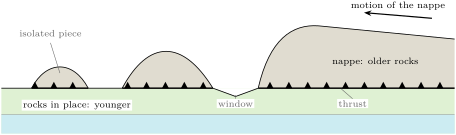
A nappe (not to scale): a sheet of older rocks carried along a nearly flat thrust over younger rocks that have stayed in place. Erosion has cut a window through it and left an isolated piece of it on the left. The teeth on the thrust point toward the block that moved over.
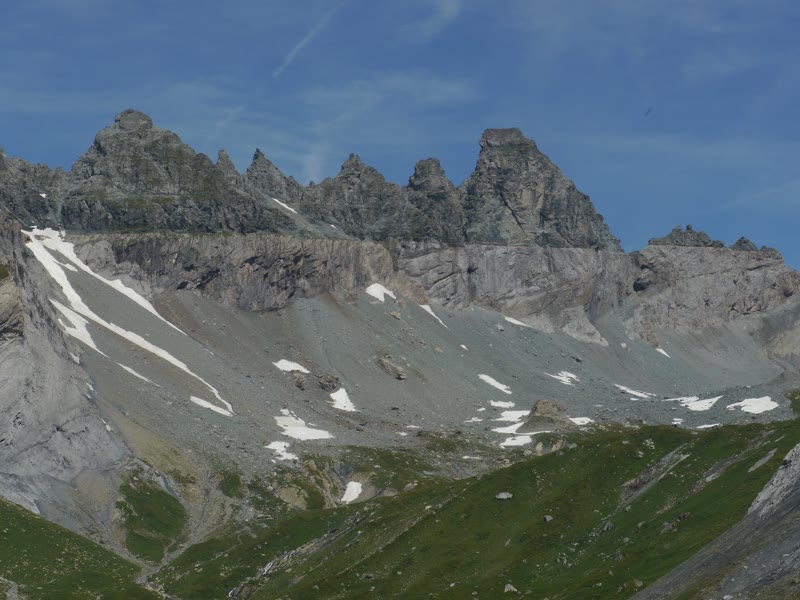
The Glarus Thrust in the Alps of eastern Switzerland. The dark rocks of the peaks, laid down in the Permian, between about 299 and 252 million years ago, rest on lighter and much younger rocks; the thrust is the sharp boundary between them. The upper rocks have moved some 40 to 50\, km. Photograph Christian Heine (CC BY-SA 3.0).
The Glarus Thrust in the Alps of eastern Switzerland. The dark rocks of the peaks, laid down in the Permian, between about 299 and 252 million years ago, rest on lighter and much younger rocks; the thrust is the sharp boundary between them. The upper rocks have moved some 40 to 50 km50\,\mathrm{km}. Photograph Christian Heine (CC BY-SA 3.0).
প্রসঙ্গসহ পড়ো →
