 Coach
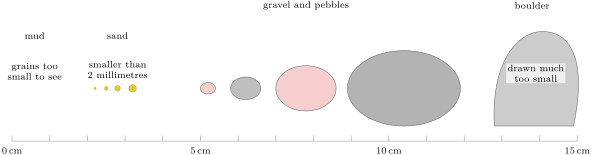
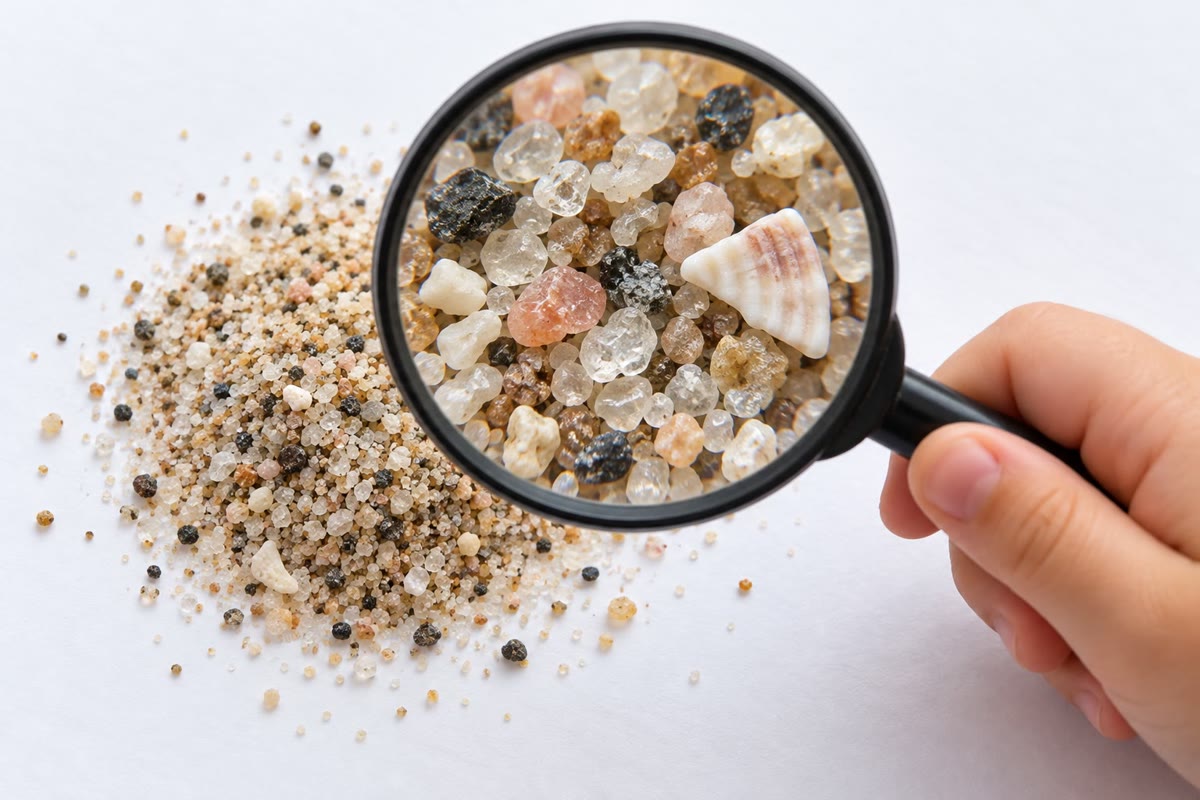
Sand is made of loose grains of broken rock smaller than 2 millimetres across: we can still see each grain. Mud is made of grains so small that we cannot see them one by one; wet, it is soft and sticky.
示例
Example 5.6 (Where do we find each size?)
Fast water can carry big stones; slow water drops them and carries only small grains. So boulders and sharp stones lie in the steep mountain streams; pebbles and gravel lie on the banks of the river in the valley; sand gathers on beaches and in quiet bends of the river; and mud settles where the water is almost still, in ponds, lakes and the mouths of rivers.
Example 5.7 (Three rocks compared)
Granite is speckled with pink, white and black grains and is very hard. Sandstone is made of grains of sand stuck together; rubbed with a finger, it sometimes lets a few grains go. Chalk is white, soft and powdery. You will learn in a later year how each of them was formed.