 Coach
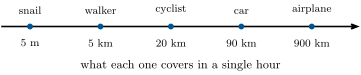
CoachThe speed of a steady traveler is the distance it covers in one fixed helping of time — usually one hour. “This car travels kilometres in each hour” names its speed; a brisk walker manages about kilometres in each hour, a racing cyclist . For crawlers we use friendlier helpings: a snail covers about metres in each hour.
Examples
Example 35.8 (Reading speeds around you)
Road signs and car dashboards speak in kilometres-per-one-hour — the round sign saying tells drivers: cover at most kilometres in each hour, a pace chosen so that a child chasing a ball can still be spared. The high-speed train’s screen may boast ; walkers’ signposts in the mountains prefer hours over kilometres — “lake: 2 h” — trusting the walker to know their own speed.