Coach
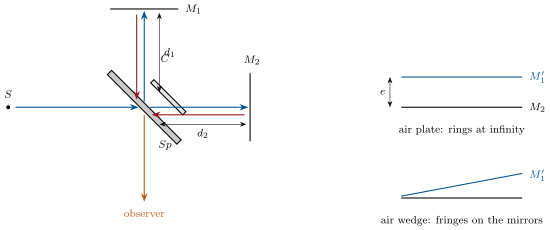
CoachA beam splitter — a glass plate with a semi-reflecting face — at divides an incident beam into two: one goes to the mirror , the other to , both perpendicular to their beams; after reflection each returns to , where half of it is sent toward the observer, where the two halves interfere. A compensating plate , identical to the splitter and parallel to it, is put in the arm that would otherwise cross the splitter’s glass only once, so that both beams cross the same thickness of glass: the path difference is then a pure difference of air paths, the same for every wavelength — which white-light fringes require. The mirrors’ distances from are and ; one mirror is mounted on a micrometer screw and on tilt screws.