
सभी किताबें

पेशेवर

1 Markets I: The Ecosystem and Exchange-Traded Marketsबाज़ार ऑनलाइन 2 Markets II: Rates, FX and Creditबाज़ार ऑनलाइन 3 Markets III: Commodities, Energy and Cryptoबाज़ार ऑनलाइन 4 Quantitative Methodsविधियाँ ऑनलाइन 5 Derivatives and Volatilityडेरिवेटिव्स ऑनलाइन 6 Rates, Credit, XVA and Riskब्याज दरें, क्रेडिट और जोखिम ऑनलाइन 7 Research Craft: Predictors, Backtests, Measurement, Portfoliosअनुसंधान ऑनलाइन 8 Strategies I: Equities and Futuresरणनीतियाँ ऑनलाइन 9 Strategies II: Volatility, Relative Value, Macro and the Bank Desksरणनीतियाँ ऑनलाइन 10 Microstructure and Executionनिष्पादन ऑनलाइन 11 Market Making and High-Frequency Tradingमार्केट मेकिंग ऑनलाइन 12 Machine Learning for Marketsमशीन लर्निंग ऑनलाइन 13 Low-Latency Softwareतकनीक ऑनलाइन 14 Networks, Hardware and Trading Infrastructureतकनीक ऑनलाइन 15 Research, Data and Risk Platformsतकनीक ऑनलाइन 16 The Desk and the Firmफ़र्म ऑनलाइन 17 The Industry: Firms, Roles and Careersकरियर ऑनलाइन 18 Interviews I: Maths, Probability and Speedकरियर ऑनलाइन 19 Interviews II: Markets, Trading Games and the Final Roundकरियर ऑनलाइन 20 Interviews III: Codeकरियर ऑनलाइन
ऐप्स परिचय Coach लॉग इन पढ़ना शुरू करें

Quantitative Finance · शब्दावली

Bid-to-cover ratio and auction tail क्या है?

अन्य नाम: bid-to-cover ratio · auction tail

Definition 4.4 Markets II: Rates, FX and Credit · अध्याय 4 — The Treasury Market

The bid-to-cover ratio is the amount bid divided by the amount offered. The auction tail is the stop-out yield minus the when-issued yield (Definition 4.6) at the bid deadline: positive, the auction cleared cheaper than the market (it tailed); negative, richer (it stopped through).
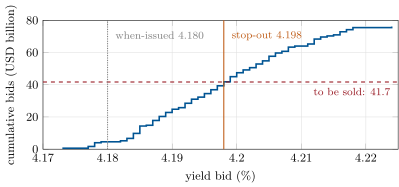
The demand curve of : bids accumulated from the lowest yield. The stop-out is where the curve crosses the amount to be sold; the gap between it and the when-issued yield at the deadline is the tail. A book whose bids sit closer to the when-issued level would stop through. Data: the chapter’s simulated bid book.
Figure 4.1. The demand curve of Example 4.5: bids accumulated from the lowest yield. The stop-out is where the curve crosses the amount to be sold; the gap between it and the when-issued yield at the deadline is the tail. A book whose bids sit closer to the when-issued level would stop through. Data: the chapter’s simulated bid book.

उदाहरण

Example 4.5 (A synthetic ten-year auction)

USD 42 billion of ten-year notes are offered; USD 300 million of noncompetitive bids leave USD 41.7 billion for 76.1 billion of competitive bids. The when-issued note trades at 4.180% at 13:00. The bids of Figure 4.1 reach 41.7 billion at 4.198%: that is the stop-out, bids there are filled at 95.02%, the tail is 1.8 basis points and the bid-to-cover ratio 1.82. Indirect bidders (investors bidding through a dealer) take 51.1%, direct bidders 10.6% and dealers 38.3%. The coupon is set at 4.125%, and every winner pays 99.409 for a note that the market valued at 4.180% a minute before. The auction is simulated; the procedure is the Treasury’s.

अध्याय में पढ़ें →