 Coach
CoachA Bund is a German federal government bond (Bundesanleihe), issued at 7, 10, 15 or 30 years with an annual coupon; the ten-year Bund’s yield is the euro area’s benchmark long rate. Syndication is the sale of a new bond through a group of banks that build a book of investor orders and set the price, instead of an auction; some issuers use it for new long bonds, where demand is hardest to predict.
Exemples
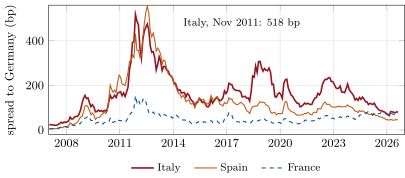
Example 7.3 (Anatomy of a widening)
Between June and November 2011 (monthly averages) Italy’s ten-year spread to Germany widened by 326 basis points. Italy’s yield rose 224 basis points; the other 102 came from Germany’s yield falling by as much, as investors fled into Bunds. A spread measures relative credit, but half of a crisis widening can be the benchmark rallying: a hedge that shorts the benchmark against the spread loses on that half.