جميع الكتب

مهني

1 Markets I: The Ecosystem and Exchange-Traded Marketsالأسواق عبر الإنترنت 2 Markets II: Rates, FX and Creditالأسواق عبر الإنترنت 3 Markets III: Commodities, Energy and Cryptoالأسواق عبر الإنترنت 4 Quantitative Methodsالأساليب عبر الإنترنت 5 Derivatives and Volatilityالمشتقات عبر الإنترنت 6 Rates, Credit, XVA and Riskالفائدة والائتمان والمخاطر عبر الإنترنت 7 Research Craft: Predictors, Backtests, Measurement, Portfoliosالبحث عبر الإنترنت 8 Strategies I: Equities and Futuresالاستراتيجيات عبر الإنترنت 9 Strategies II: Volatility, Relative Value, Macro and the Bank Desksالاستراتيجيات عبر الإنترنت 10 Microstructure and Executionالتنفيذ عبر الإنترنت 11 Market Making and High-Frequency Tradingصناعة السوق عبر الإنترنت 12 Machine Learning for Marketsتعلم الآلة عبر الإنترنت 13 Low-Latency Softwareالتكنولوجيا عبر الإنترنت 14 Networks, Hardware and Trading Infrastructureالتكنولوجيا عبر الإنترنت 15 Research, Data and Risk Platformsالتكنولوجيا عبر الإنترنت 16 The Desk and the Firmالشركة عبر الإنترنت 17 The Industry: Firms, Roles and Careersالمسارات المهنية عبر الإنترنت 18 The Interview Bookالمسارات المهنية عبر الإنترنت
التطبيقات حول المدرب تسجيل الدخول ابدأ القراءة

Quantitative Finance · المسرد

ما معنى Corridor and floor systems؟

يُعرف أيضًا باسم: corridor system · floor system

Definition 1.6 Markets II: Rates, FX and Credit · الفصل 1 — Central Banks and the Short Rate

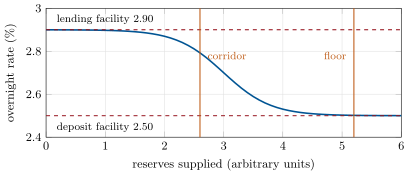
In a corridor system the central bank keeps reserves scarce, so that banks trade them among themselves and the overnight rate settles inside [iD,iL][i_D, i_L], near a target it steers by adjusting the supply of reserves day by day. In a floor system it supplies reserves beyond what banks need, so that the marginal reserve is worth only the deposit rate, and the overnight rate sits at, or just below, iDi_D.

A stylised demand curve for reserves between the ECB’s facility rates of 16 September 2026. With supply at the left vertical line (scarce reserves) the rate is set on the steep part and moves with every change in supply; at the right one (ample reserves) it rests on the deposit rate. The curve’s shape is illustrative; the two facility rates are the ECB’s. Data: the chapter’s simulation.
Figure 1.2. A stylised demand curve for reserves between the ECB’s facility rates of 16 September 2026. With supply at the left vertical line (scarce reserves) the rate is set on the steep part and moves with every change in supply; at the right one (ample reserves) it rests on the deposit rate. The curve’s shape is illustrative; the two facility rates are the ECB’s. Data: the chapter’s simulation.

أمثلة

Example 1.7 (The euro corridor)

From 16 September 2026 the ECB’s deposit facility pays 2.50%, its weekly main refinancing operations lend at 2.65% and its marginal lending facility at 2.90%. The corridor is 40 basis points wide. Since 18 September 2024 the refinancing rate sits only 15 basis points above the deposit rate (it had been 50), a change announced in March 2024 so that banks would borrow in the weekly operations as reserves shrink and the overnight rate would stay close to the deposit rate. The euro area has, in effect, chosen a floor while keeping the corridor as its outer bounds.

اقرأ في الفصل →