 Coach
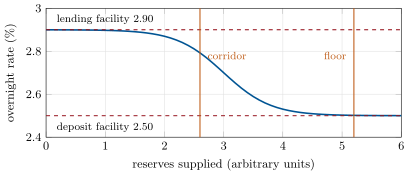
CoachIn a corridor system the central bank keeps reserves scarce, so that banks trade them among themselves and the overnight rate settles inside , near a target it steers by adjusting the supply of reserves day by day. In a floor system it supplies reserves beyond what banks need, so that the marginal reserve is worth only the deposit rate, and the overnight rate sits at, or just below, .
Exemples
Example 1.7 (The euro corridor)
From 16 September 2026 the ECB’s deposit facility pays 2.50%, its weekly main refinancing operations lend at 2.65% and its marginal lending facility at 2.90%. The corridor is 40 basis points wide. Since 18 September 2024 the refinancing rate sits only 15 basis points above the deposit rate (it had been 50), a change announced in March 2024 so that banks would borrow in the weekly operations as reserves shrink and the overnight rate would stay close to the deposit rate. The euro area has, in effect, chosen a floor while keeping the corridor as its outer bounds.