Biology · Glossary

What is Homeotic genes and colinearity?

Definition 23.3 University Biology — Year 3 · Chapter 23 — Developmental Genetics and Evolution of Form

A homeotic mutation turns one body part into another: Bateson’s word (1894) for the abnormalities that “substitute one member of a series for another.” In the fly, Antennapedia dominant mutants grow legs where antennae should be; bithorax mutants (Lewis, 1978) turn the third thoracic segment into a copy of the second, so that the balancers (halteres) become a second pair of wings. The eight genes responsible, the Hox genes, lie in two clusters on one chromosome, and Lewis noticed that their order along the DNA matches the order along the body of the segments they control — colinearity, still not fully explained. Each encodes a transcription factor with the same 60-amino-acid DNA-binding homeobox domain (McGinnis, Gehring, 1984), which was then found in every animal: mice and humans carry four clusters of thirteen genes each, colinear in the same way, expressed in nested domains along the body axis, the later genes in the cluster more posterior. A cell’s identity along the axis is given by the combination of Hox genes it expresses, the Hox code; posterior genes dominate anterior ones (posterior prevalence), so losing a posterior gene lets the segment adopt the identity of the one in front. Hox genes do not build a segment; they tell an already-built segment which one it is, by switching on the batteries of downstream genes appropriate to a leg, a wing, a rib or a lumbar vertebra.
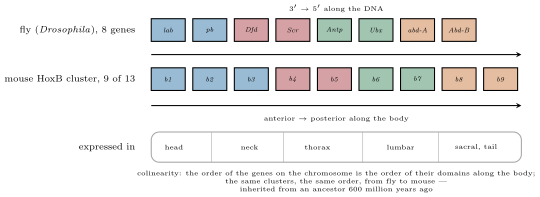
Hox clusters in a fly and a mouse. The genes lie along the DNA in the order of the body regions they specify, in both animals, and the homologous genes can be told by sequence: a mouse Hoxb6 gene is recognisably the fly’s Antennapedia.
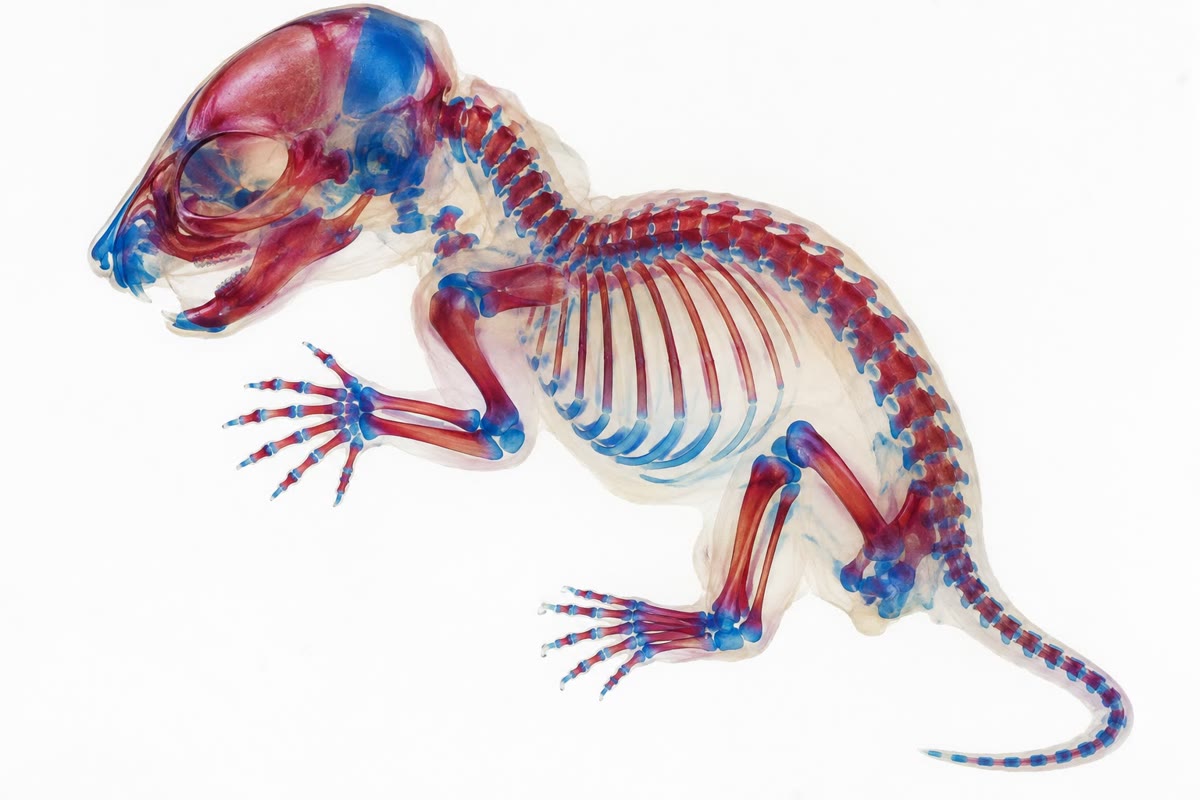
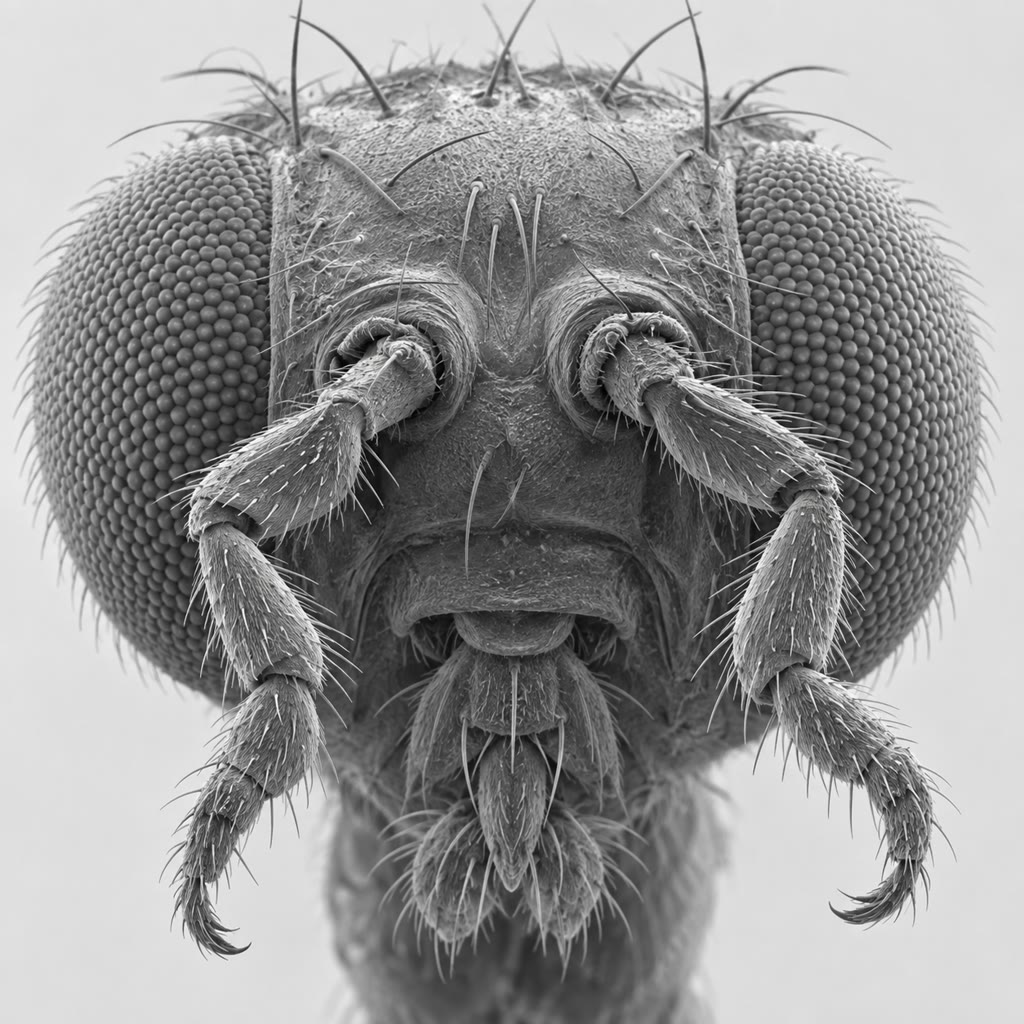
Left: the head of an Antennapedia mutant fly, a pair of legs where the antennae should be — the segment built correctly and told the wrong identity. Right: a mouse embryo’s skeleton, cartilage blue and bone red, the vertebrae along which the Hox code is read. Left: the head of an Antennapedia mutant fly, a pair of legs where the antennae should be — the segment built correctly and told the wrong identity. Right: a mouse embryo’s skeleton, cartilage blue and bone red, the vertebrae along which the Hox code is read.
Left: the head of an Antennapedia mutant fly, a pair of legs where the antennae should be — the segment built correctly and told the wrong identity. Right: a mouse embryo’s skeleton, cartilage blue and bone red, the vertebrae along which the Hox code is read.
Read in context →