Coach
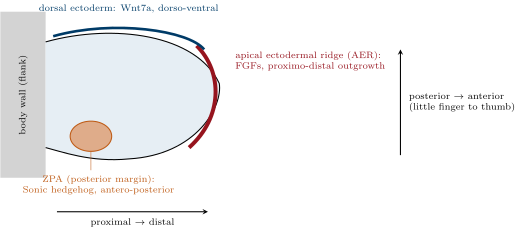
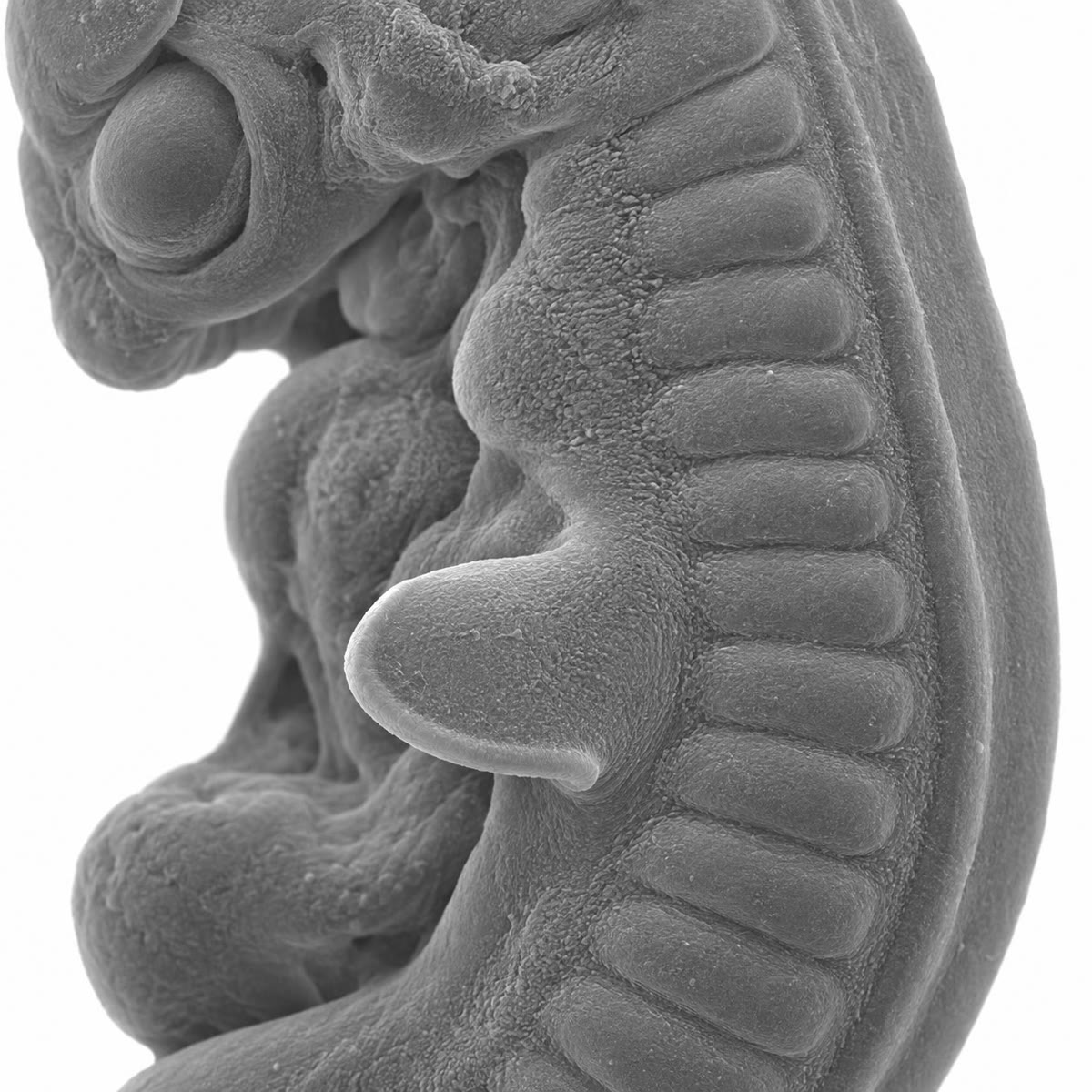
CoachThe limb bud is a swelling of lateral plate mesoderm covered by ectoderm, arising at a fixed position along the flank (the limb field) where the Hox code of the body axis permits it; its mesoderm will make bone, cartilage, tendon and dermis, and cells that migrate into it from the somites will make the muscles. The bud has three axes, each governed by a signalling centre. Proximo-distal (shoulder to fingertip): the apical ectodermal ridge (AER), a thickened strip of ectoderm along the tip, secretes fibroblast growth factors (FGFs) that keep the mesoderm beneath it dividing and undifferentiated. Antero-posterior (thumb to little finger): the zone of polarising activity (ZPA), a block of mesoderm at the posterior margin, secretes the morphogen Sonic hedgehog (Shh). Dorso-ventral (back of the hand to palm): the dorsal ectoderm secretes Wnt7a. Forelimb and hindlimb buds look alike and use the same signals; they differ in a transcription factor expressed before the bud appears (Tbx5 in the forelimb, Tbx4 in the hindlimb), which is why a wing is a wing.