Coach
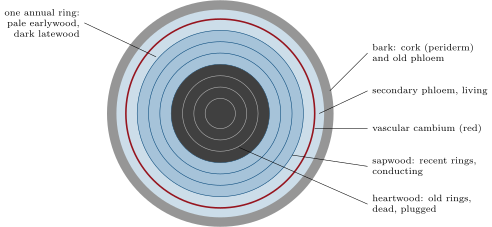
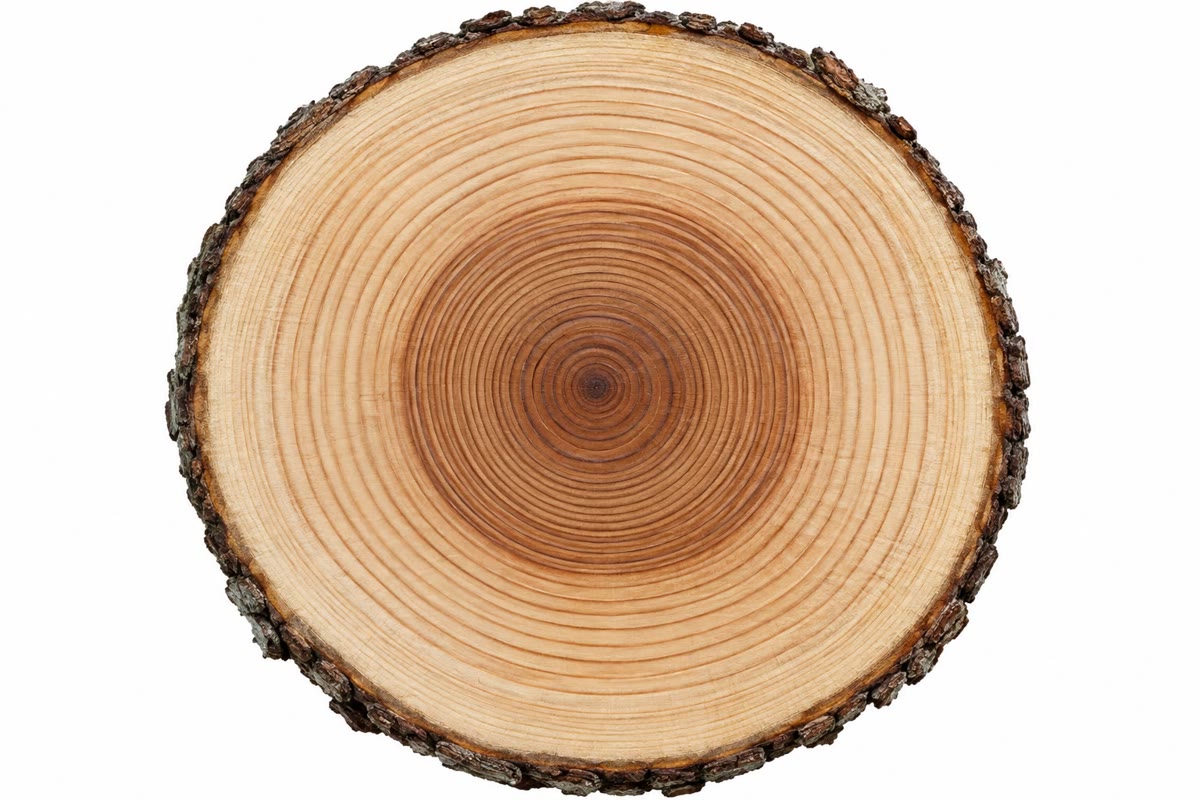
CoachIn a woody stem the strands of primary xylem and phloem are joined, in the first year, into a continuous cylinder of dividing cells, the vascular cambium. Its cells divide tangentially, adding secondary xylem — wood — to the inside and secondary phloem to the outside, so that the cambium moves outward as the trunk thickens, and adding occasional radial divisions to widen the ring. In seasonal climates the wood laid down in spring has wide, thin-walled vessels (earlywood) and that of summer narrow, thick-walled ones (latewood), so that each year leaves a visible annual ring; the rings record the tree’s age and, in their widths, the climate of each year (dendrochronology). Only the outer rings, the sapwood, conduct; the inner ones, the heartwood, are dead, plugged and darkened with resins and tannins, and serve as the tree’s skeleton. Outside the phloem a second lateral meristem, the cork cambium, makes the periderm — layers of cork cells, dead and waterproofed with suberin — which with the old phloem is the bark. A trunk is thus a thin living shell of cambium, sapwood and phloem around a dead core, under a dead skin.