 Coach
In a solution, the substance that dissolves is the solute, and the liquid it dissolves in is the solvent. When the solvent is water, the solution is an aqueous solution.
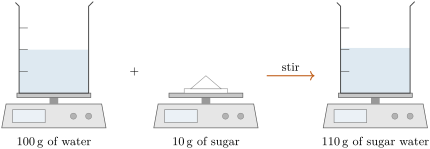
示例
Example 9.2 (Solvents other than water)
Water is the commonest solvent, but not the only one. Nail varnish does not dissolve in water; it dissolves in propanone (acetone), the solvent of nail-varnish remover. Grease and oil paint dissolve in white spirit. Many medicines are dissolved in ethanol. A solution can have several solutes: sea water holds dissolved salt and many other substances.