School Chemistry — Grades 1 to 12 · Grades 1–12
9Solutions and Solubility
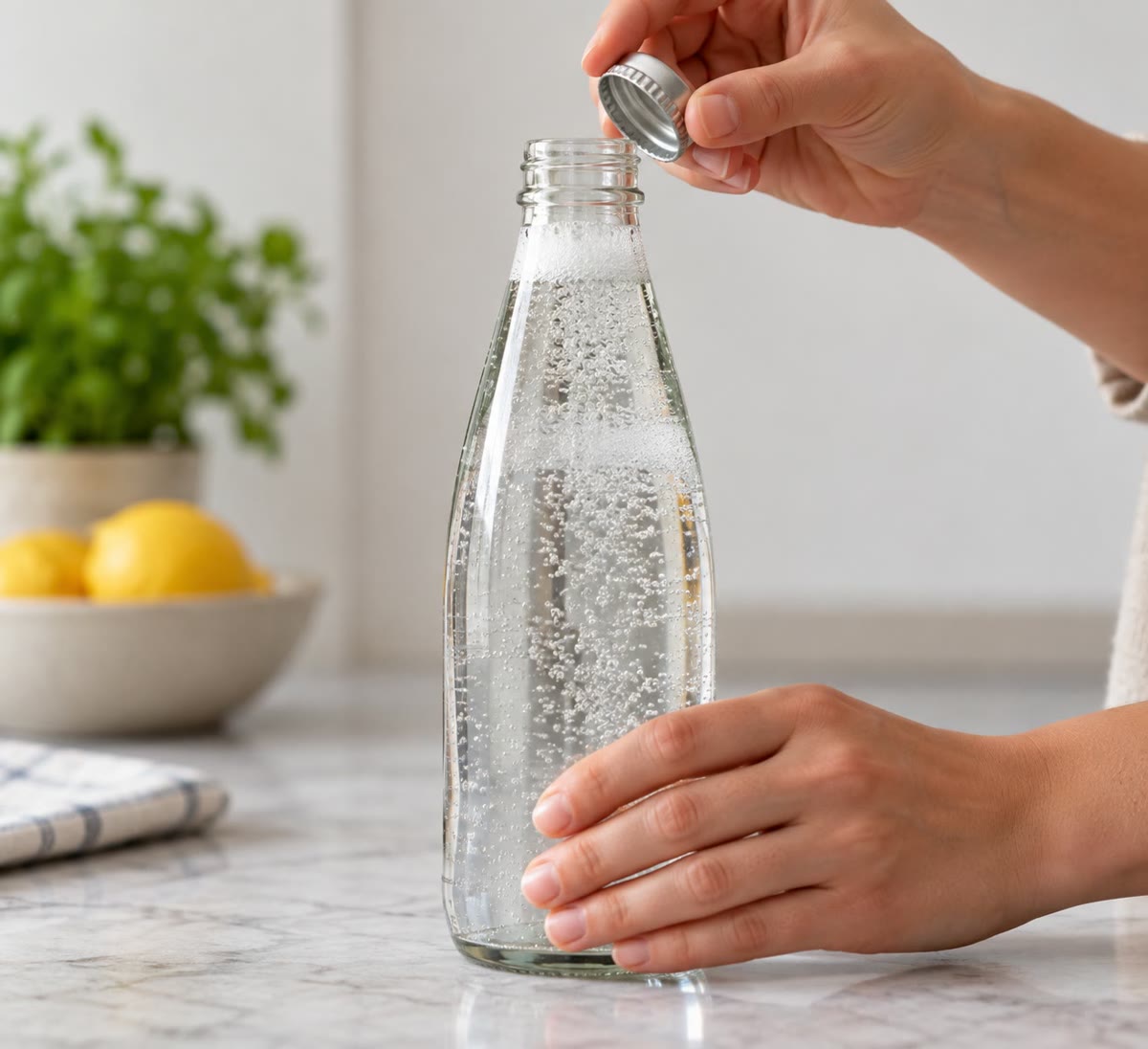
A bottle of sparkling water is opened: a hiss, and a rush of tiny bubbles rises from nowhere. The water looked perfectly clear a second earlier, yet a gas was dissolved in it all along. Solids dissolve, liquids dissolve, and gases dissolve too — but never without limit. This chapter names the parts of a solution and measures how much of a substance a liquid can hold.
You already know
A solid that dissolves in water disappears from sight and leaves the liquid clear; the clear liquid is a solution, and what was dissolved is still in it (Chapter 2). A solution is a homogeneous mixture of chemical species (Chapter 8). Evaporating the water gets the dissolved solid back (Chapter 3).
9.1 Solute and solvent
Definition 9.1 (Solute, solvent, aqueous solution)
In a solution, the substance that dissolves is the solute, and the liquid it dissolves in is the solvent. When the solvent is water, the solution is an aqueous solution.
Example 9.2 (Solvents other than water)
Water is the commonest solvent, but not the only one. Nail varnish does not dissolve in water; it dissolves in propanone (acetone), the solvent of nail-varnish remover. Grease and oil paint dissolve in white spirit. Many medicines are dissolved in ethanol. A solution can have several solutes: sea water holds dissolved salt and many other substances.
Safety


Propanone (acetone): highly flammable liquid and vapour (GHS02); it irritates the eyes and its vapour can make one drowsy or dizzy (GHS07). It is used in a ventilated room, far from any flame.
Proposition 9.3 (The masses add up)
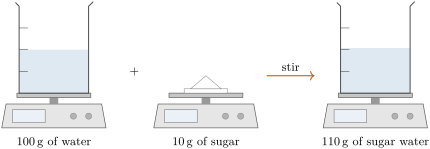
The mass of a solution is the mass of the solvent plus the mass of the dissolved solute: nothing is lost when a solid dissolves, even though it can no longer be seen.
9.2 Saturation and solubility
Definition 9.4 (Saturated solution)
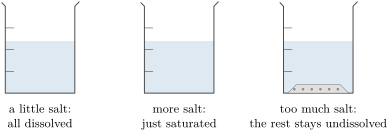
A solution is a saturated solution when it cannot dissolve any more of its solute: any solute added stays at the bottom, undissolved, however long we stir.
Definition 9.5 (Solubility)
The solubility of a solute in a solvent is the largest mass of solute that a given amount of solvent can dissolve, at a given temperature. For a solid in water it is often given in grams per litre (or per kilogram) of water.
Proposition 9.6 (Some solubilities in water)
Measured solubilities in water differ enormously:
| solute | solubility in water | conditions |
|---|---|---|
| sugar (sucrose) | about per litre of water | room temperature |
| salt (sodium chloride) | per kilogram of water | |
| carbon dioxide | about per litre | , under the gas |
| oxygen | about per litre | , under the gas |
| sand, chalk | practically none | — |
A litre of water can dissolve more than its own mass of sugar, but not even half a gram of oxygen.
Method 9.7 (Will it all dissolve?)
To know whether a mass of solute dissolves completely in a volume of water:
- find the solubility of the solute (in g per litre of water);
- compute the largest mass that this volume of water can dissolve;
- compare with : if is smaller, everything dissolves; if is larger, the solution is saturated and the rest stays at the bottom.
Example 9.8 (Salt in a glass)
Can of salt dissolve in of water (about )? One kilogram of water dissolves at most of salt, so of water dissolves at most . Since , all the salt dissolves.
In the lab — Saturating salt water
The teacher adds salt to of water one spoonful at a time, stirring well after each. The first spoonfuls disappear; then a spoonful no longer dissolves completely and white grains stay at the bottom: the solution is saturated. Weighing the salt used shows that about have dissolved.
9.3 Miscible and immiscible liquids
Definition 9.9 (Miscible and immiscible liquids)
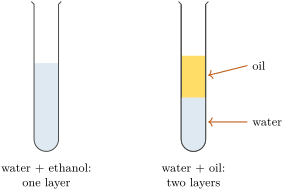
Two liquids are miscible when, mixed together, they give one single homogeneous liquid. They are immiscible when they separate into two layers, the lighter one on top.
Example 9.10 (Water with ethanol, water with oil)
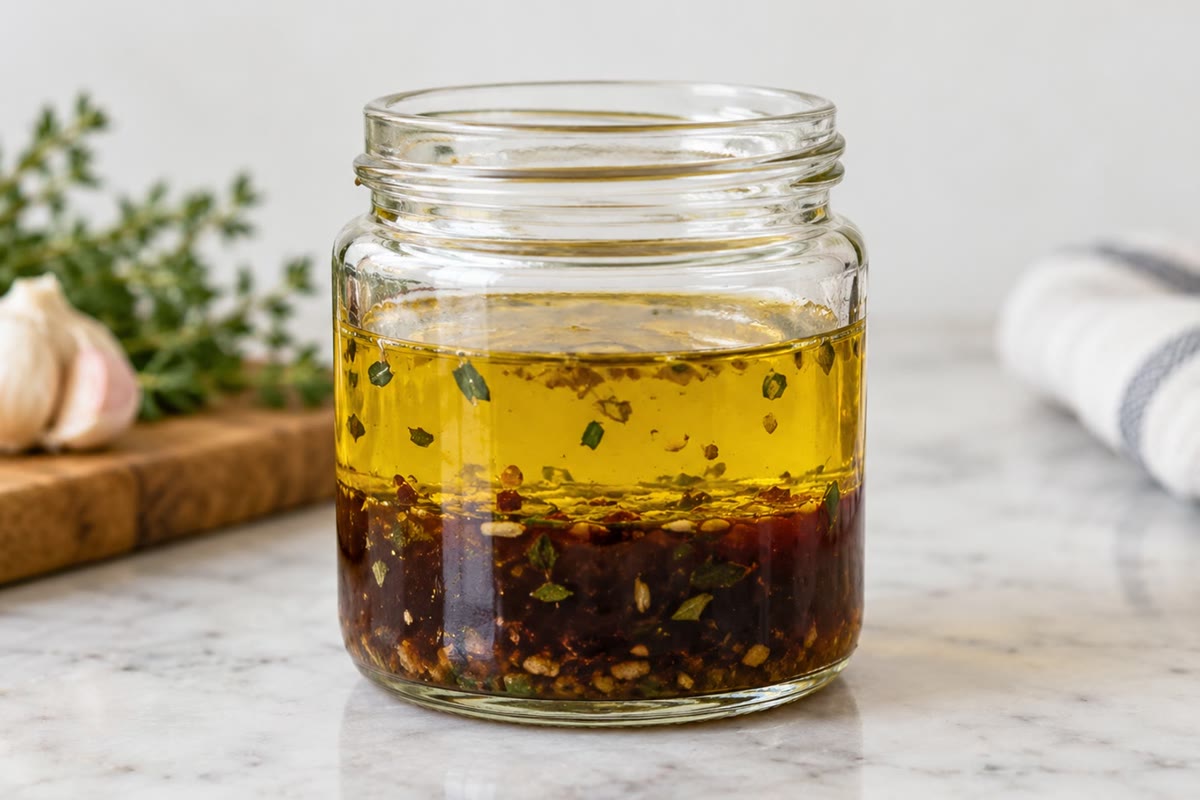
Water and ethanol are miscible: shaken together, they give one clear liquid. Water and oil are immiscible: however hard they are shaken, the oil comes back up and floats on the water in a separate layer. In a jar of salad dressing the oil floats above the vinegar, which is mostly water.
9.4 Gases dissolve too
Proposition 9.11 (Dissolved gases)
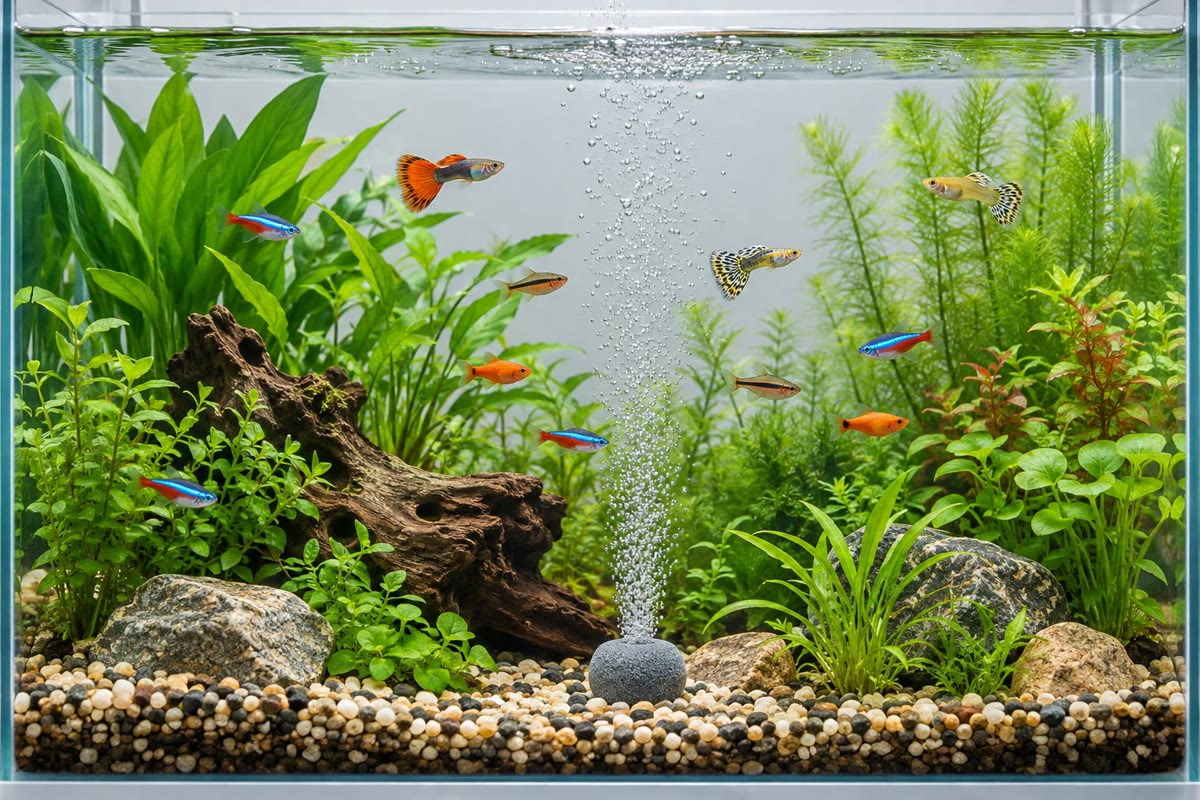
Gases dissolve in water, a little. Sparkling drinks are made by dissolving carbon dioxide in them under pressure in a closed bottle; when the bottle is opened, part of the gas comes back out as bubbles. Water in contact with air holds some dissolved oxygen, which fish take in through their gills. A gas dissolves less in warm water than in cold water: a warm sparkling drink goes flat faster.
Example 9.12 (Oceans and carbon dioxide)
The oceans are in contact with the air over two thirds of the Earth’s surface. Carbon dioxide of the air dissolves in them, so the oceans take up part of the carbon dioxide that people release into the air.
9.5 Exercises
Exercise 9.1 ★
In sugar water, name the solute and the solvent. Is it an aqueous solution?
Solution
Solution of Exercise 9.1.
Solute: sugar. Solvent: water. Yes, the solvent is water: it is an aqueous solution.
Exercise 9.2 ★
What is a saturated solution? How can you see that a solution is saturated?
Exercise 9.3 ★
of salt are dissolved in of water. What is the mass of the solution?
Solution
Solution of Exercise 9.3.
.
Exercise 9.4 ★
Miscible or immiscible with water: ethanol, cooking oil, vinegar?
Solution
Solution of Exercise 9.4.
Ethanol: miscible. Cooking oil: immiscible. Vinegar: miscible (it is mostly water).
Exercise 9.5 ★
Name the solvent of nail-varnish remover and give the meaning of its two pictograms.
Solution
Solution of Exercise 9.5.
Propanone (acetone). GHS02: highly flammable; GHS07: irritates the eyes, the vapour can cause drowsiness or dizziness.
Exercise 9.6 ★★
Using the solubility of salt, find the largest mass of salt that of water can dissolve at .
Solution
Solution of Exercise 9.6.
.
Exercise 9.7 ★★
of salt are stirred into of water at . Does it all dissolve? If not, what mass stays at the bottom?
Exercise 9.8 ★★
of sugar are dissolved in of water. What percentage of the mass of the solution is sugar?
Solution
Solution of Exercise 9.8.
The solution weighs ; .
Exercise 9.9 ★★
Look at the figure of the three beakers of salt water. In which beaker could more salt still dissolve?
Solution
Solution of Exercise 9.9.
In the first beaker, where all the salt has dissolved and the solution is not yet saturated.
Exercise 9.10 ★★
Why does a bottle of sparkling water fizz when it is opened, and not before?
Solution
Solution of Exercise 9.10.
The carbon dioxide was dissolved under pressure in the closed bottle. Opening it lowers the pressure: the water can hold less gas, and the extra gas comes out as bubbles.
Exercise 9.11 ★★★
A litre of water can dissolve about of sugar but only about of oxygen. How many times more sugar than oxygen is that?
Solution
Solution of Exercise 9.11.
times more.
Exercise 9.12 ★★★
In summer, the water of a pond warms up and fish come up to the surface to gulp air. Use this chapter to explain why.
Solution
Solution of Exercise 9.12.
A gas dissolves less in warm water: the warm pond holds less dissolved oxygen, and the fish lack oxygen.
9.6 Problem: The Cheese-Maker’s Brine
Problem 9.1
Weekend problem — a bath of saturated salt water for cheeses, and what the summer heat does to it
Many cheeses are soaked for a few hours in a bath of brine: water saturated with salt. A cheese-maker fills a tank with of water () and adds salt until some stays undissolved at the bottom. Take the solubility of salt as per kilogram of water.
Part I — Words.
- In the brine, which is the solute and which the solvent?
- What does “saturated” mean for the brine?
- Why does the cheese-maker add salt until a little stays at the bottom?
Part II — Making the brine.
- What mass of salt dissolves in the of water?
- What is the mass of the brine (without the undissolved salt)?
- What percentage of the mass of the brine is salt? Round to the nearest whole number.
- One day only of salt are added. Is the brine saturated? How much more salt could it dissolve?
Part III — A hot summer. During a hot week, () of water evaporate from the saturated brine of Part II, and no salt is lost.
- How much water is left in the tank?
- What mass of salt can this water still hold dissolved?
- What happens to the salt that the remaining water cannot hold?
- How can the cheese-maker see, by looking, that this has happened?
- Compute the mass of salt that has crystallised at the bottom of the tank.
Solution
Solution of Problem 9.1.
1. Solute: salt. Solvent: water.
2. The water holds as much salt as it can: no more salt can dissolve in it.
3. The undissolved salt at the bottom proves that the brine is saturated: it holds as much salt as possible.
4. .
5. .
6. : about .
7. No: the water could dissolve . It could still dissolve .
8. of water ().
9. .
10. It comes out of solution as solid crystals: it crystallises and sinks to the bottom.
11. New white crystals appear and pile up at the bottom of the tank.
12. of salt have crystallised.