全部书籍

专业

应用 关于 Coach 登录 开始阅读

书籍暂未推出简体中文版——当前显示英文版。

Earth and Space Sciences · 术语表

什么是 Cleavage; fracture?

又称: cleavage (of a mineral) · fracture (of a mineral)

Definition 16.3 High School Earth and Space Sciences · 第 16 章 — Minerals

Cleavage is the tendency of a mineral to break along flat planes, parallel to directions in which the bonds between its atoms are weaker. Fracture is breakage along irregular surfaces, in a mineral with no plane of weakness; a fracture with smooth curved surfaces, like broken glass, is called conchoidal.
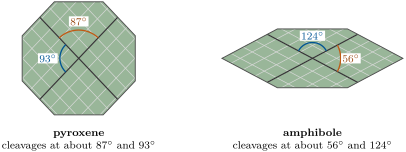
Cross-sections of a pyroxene crystal (left) and an amphibole crystal (right), cut across their length (a drawing). The thin lines are the traces of the two cleavages, two of them drawn thicker where the angles are read; the angles between them, nearly square in the pyroxene, much more open and much more closed in the amphibole, tell two otherwise similar dark minerals apart.
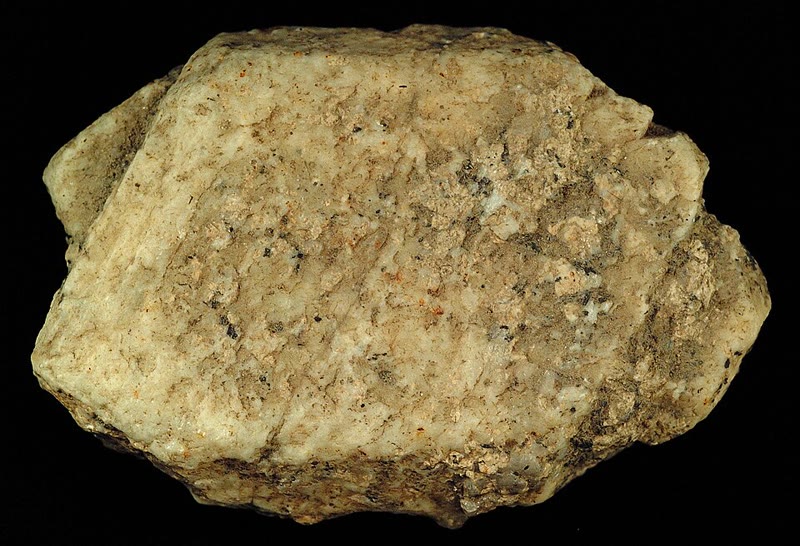
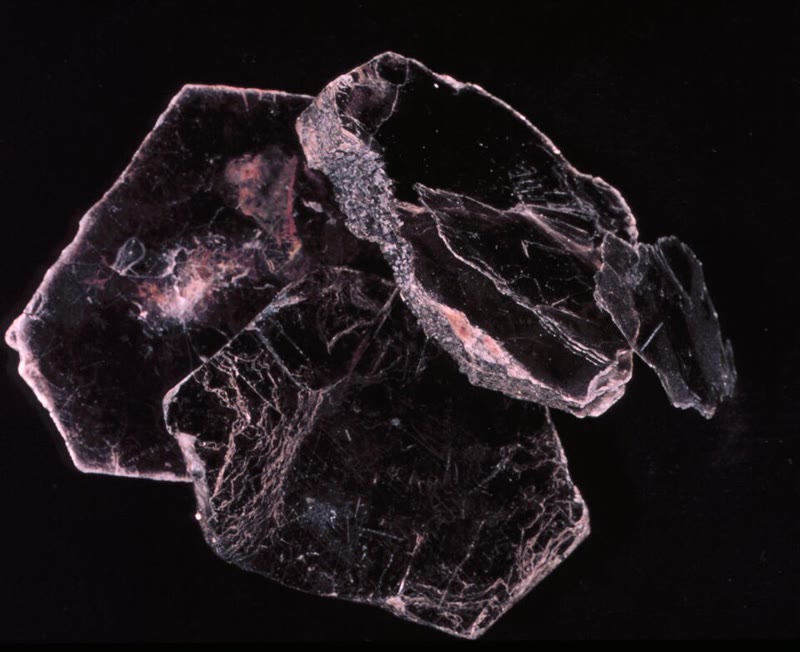
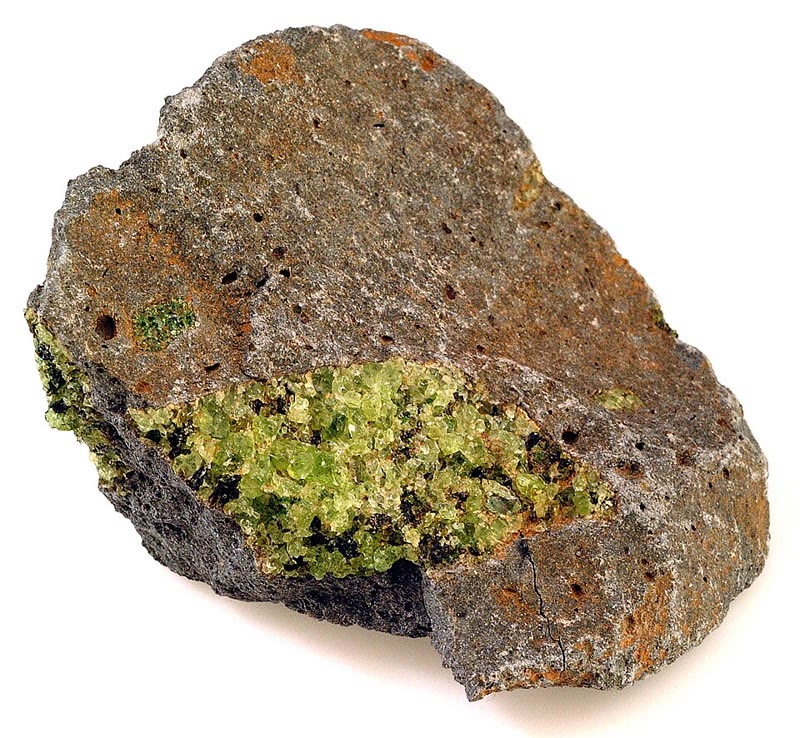
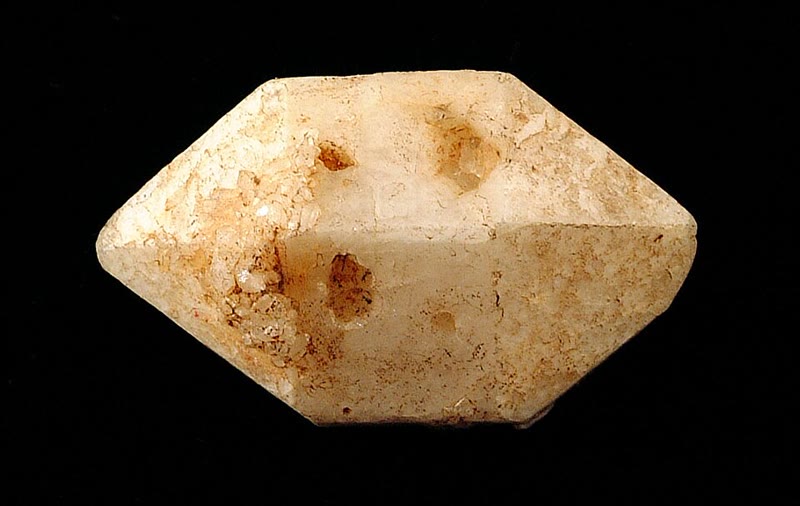
Four rock-forming minerals. From left to right: a quartz crystal, a six-sided prism ending in points at both ends, about 5\, cm long; an orthoclase feldspar, two crystals grown together, about 7\, cm; six-sided plates of biotite mica, about 6\, cm, which split into thin sheets along their single cleavage; green grains of olivine in a basalt. Photographs Shannon Heinle, Darla Sondrol, Dexter Perkins and Nessa Eull, Geology Digital Image Library (CC0). Four rock-forming minerals. From left to right: a quartz crystal, a six-sided prism ending in points at both ends, about 5\, cm long; an orthoclase feldspar, two crystals grown together, about 7\, cm; six-sided plates of biotite mica, about 6\, cm, which split into thin sheets along their single cleavage; green grains of olivine in a basalt. Photographs Shannon Heinle, Darla Sondrol, Dexter Perkins and Nessa Eull, Geology Digital Image Library (CC0). Four rock-forming minerals. From left to right: a quartz crystal, a six-sided prism ending in points at both ends, about 5\, cm long; an orthoclase feldspar, two crystals grown together, about 7\, cm; six-sided plates of biotite mica, about 6\, cm, which split into thin sheets along their single cleavage; green grains of olivine in a basalt. Photographs Shannon Heinle, Darla Sondrol, Dexter Perkins and Nessa Eull, Geology Digital Image Library (CC0). Four rock-forming minerals. From left to right: a quartz crystal, a six-sided prism ending in points at both ends, about 5\, cm long; an orthoclase feldspar, two crystals grown together, about 7\, cm; six-sided plates of biotite mica, about 6\, cm, which split into thin sheets along their single cleavage; green grains of olivine in a basalt. Photographs Shannon Heinle, Darla Sondrol, Dexter Perkins and Nessa Eull, Geology Digital Image Library (CC0).
Four rock-forming minerals. From left to right: a quartz crystal, a six-sided prism ending in points at both ends, about 5 cm5\,\mathrm{cm} long; an orthoclase feldspar, two crystals grown together, about 7 cm7\,\mathrm{cm}; six-sided plates of biotite mica, about 6 cm6\,\mathrm{cm}, which split into thin sheets along their single cleavage; green grains of olivine in a basalt. Photographs Shannon Heinle, Darla Sondrol, Dexter Perkins and Nessa Eull, Geology Digital Image Library (CC0).
在原文中阅读 →