সব বই

পেশাদার

1 Markets I: The Ecosystem and Exchange-Traded Marketsবাজার অনলাইন 2 Markets II: Rates, FX and Creditবাজার অনলাইন 3 Markets III: Commodities, Energy and Cryptoবাজার অনলাইন 4 Quantitative Methodsপদ্ধতি অনলাইন 5 Derivatives and Volatilityডেরিভেটিভস অনলাইন 6 Rates, Credit, XVA and Riskসুদহার, ঋণ ও ঝুঁকি অনলাইন 7 Research Craft: Predictors, Backtests, Measurement, Portfoliosগবেষণা অনলাইন 8 Strategies I: Equities and Futuresকৌশল অনলাইন 9 Strategies II: Volatility, Relative Value, Macro and the Bank Desksকৌশল অনলাইন 10 Microstructure and Executionএক্সিকিউশন অনলাইন 11 Market Making and High-Frequency Tradingমার্কেট মেকিং অনলাইন 12 Machine Learning for Marketsমেশিন লার্নিং অনলাইন 13 Low-Latency Softwareপ্রযুক্তি অনলাইন 14 Networks, Hardware and Trading Infrastructureপ্রযুক্তি অনলাইন 15 Research, Data and Risk Platformsপ্রযুক্তি অনলাইন 16 The Desk and the Firmপ্রতিষ্ঠান অনলাইন 17 The Industry: Firms, Roles and Careersক্যারিয়ার অনলাইন 18 Interviews I: Maths, Probability and Speedক্যারিয়ার অনলাইন 19 Interviews II: Markets, Trading Games and the Final Roundক্যারিয়ার অনলাইন 20 Interviews III: Codeক্যারিয়ার অনলাইন
অ্যাপ পরিচিতি Coach সাইন ইন পড়া শুরু করো

বইগুলো এখনো বাংলা ভাষায় পাওয়া যায় না — ইংরেজি সংস্করণ দেখানো হচ্ছে।

Earth and Space Sciences · পরিভাষা

Cleavage; fracture কী?

অন্য নাম: cleavage (of a mineral) · fracture (of a mineral)

Definition 16.3 High School Earth and Space Sciences · অধ্যায় 16 — Minerals

Cleavage is the tendency of a mineral to break along flat planes, parallel to directions in which the bonds between its atoms are weaker. Fracture is breakage along irregular surfaces, in a mineral with no plane of weakness; a fracture with smooth curved surfaces, like broken glass, is called conchoidal.
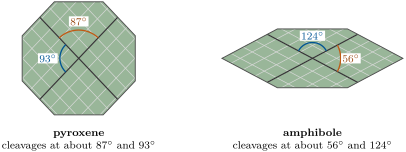
Cross-sections of a pyroxene crystal (left) and an amphibole crystal (right), cut across their length (a drawing). The thin lines are the traces of the two cleavages, two of them drawn thicker where the angles are read; the angles between them, nearly square in the pyroxene, much more open and much more closed in the amphibole, tell two otherwise similar dark minerals apart.
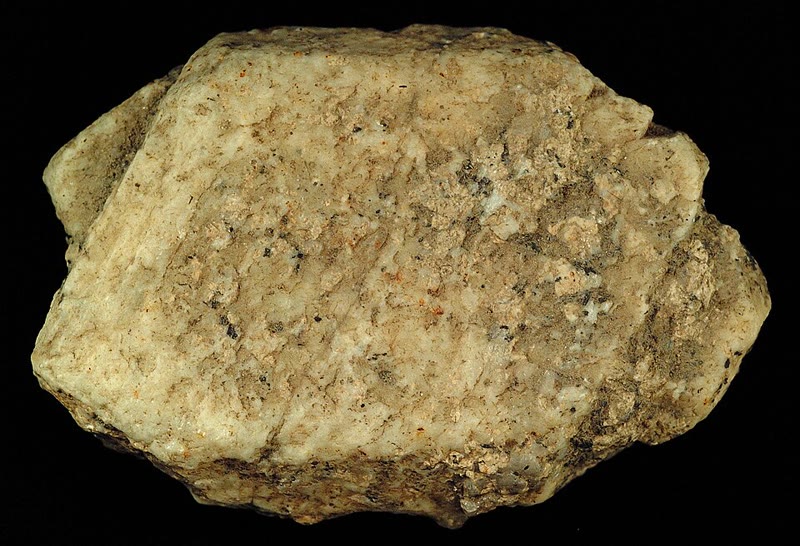
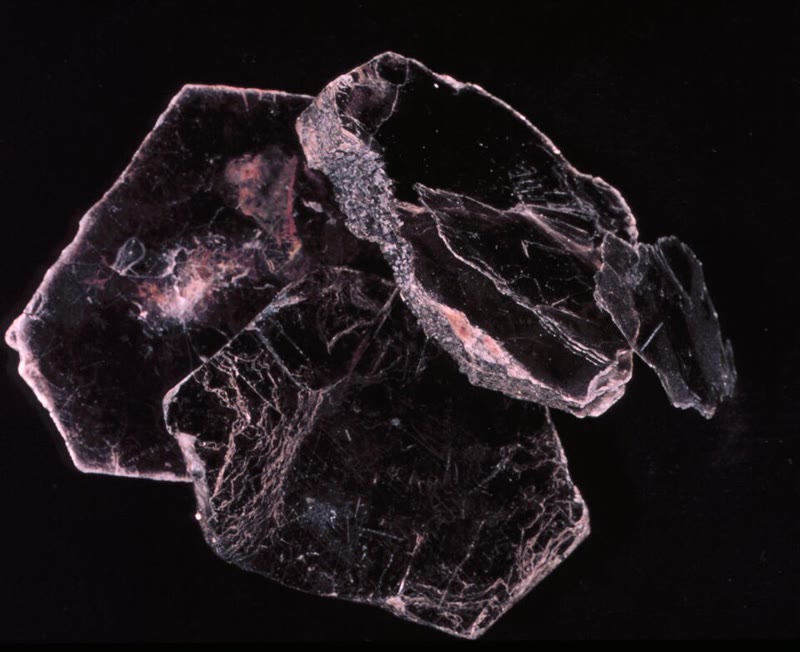
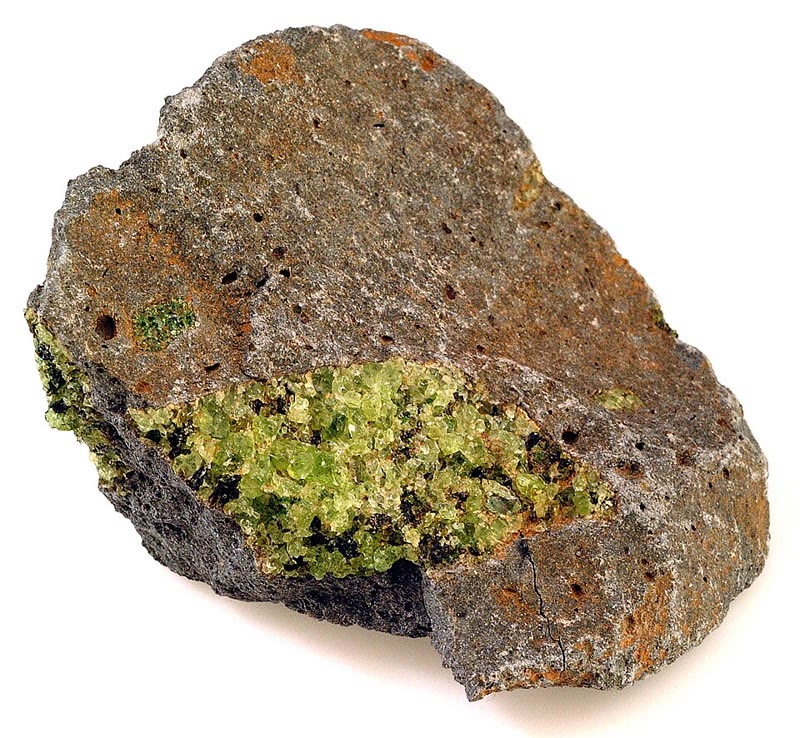
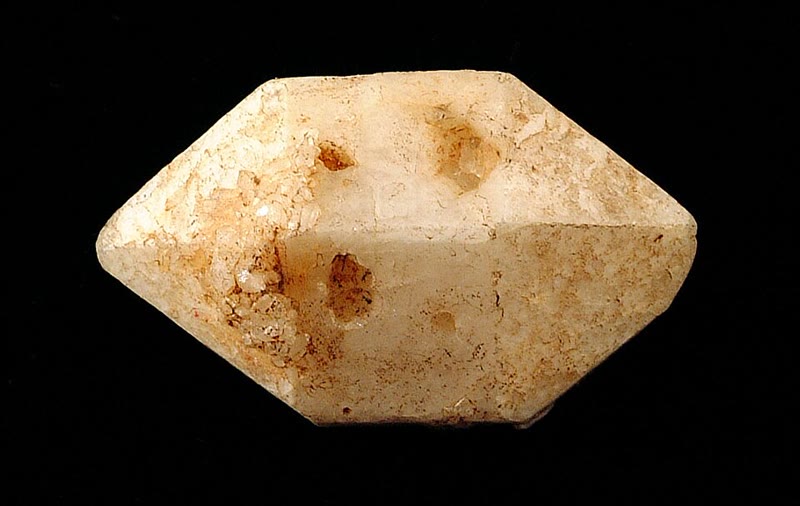
Four rock-forming minerals. From left to right: a quartz crystal, a six-sided prism ending in points at both ends, about 5\, cm long; an orthoclase feldspar, two crystals grown together, about 7\, cm; six-sided plates of biotite mica, about 6\, cm, which split into thin sheets along their single cleavage; green grains of olivine in a basalt. Photographs Shannon Heinle, Darla Sondrol, Dexter Perkins and Nessa Eull, Geology Digital Image Library (CC0). Four rock-forming minerals. From left to right: a quartz crystal, a six-sided prism ending in points at both ends, about 5\, cm long; an orthoclase feldspar, two crystals grown together, about 7\, cm; six-sided plates of biotite mica, about 6\, cm, which split into thin sheets along their single cleavage; green grains of olivine in a basalt. Photographs Shannon Heinle, Darla Sondrol, Dexter Perkins and Nessa Eull, Geology Digital Image Library (CC0). Four rock-forming minerals. From left to right: a quartz crystal, a six-sided prism ending in points at both ends, about 5\, cm long; an orthoclase feldspar, two crystals grown together, about 7\, cm; six-sided plates of biotite mica, about 6\, cm, which split into thin sheets along their single cleavage; green grains of olivine in a basalt. Photographs Shannon Heinle, Darla Sondrol, Dexter Perkins and Nessa Eull, Geology Digital Image Library (CC0). Four rock-forming minerals. From left to right: a quartz crystal, a six-sided prism ending in points at both ends, about 5\, cm long; an orthoclase feldspar, two crystals grown together, about 7\, cm; six-sided plates of biotite mica, about 6\, cm, which split into thin sheets along their single cleavage; green grains of olivine in a basalt. Photographs Shannon Heinle, Darla Sondrol, Dexter Perkins and Nessa Eull, Geology Digital Image Library (CC0).
Four rock-forming minerals. From left to right: a quartz crystal, a six-sided prism ending in points at both ends, about 5 cm5\,\mathrm{cm} long; an orthoclase feldspar, two crystals grown together, about 7 cm7\,\mathrm{cm}; six-sided plates of biotite mica, about 6 cm6\,\mathrm{cm}, which split into thin sheets along their single cleavage; green grains of olivine in a basalt. Photographs Shannon Heinle, Darla Sondrol, Dexter Perkins and Nessa Eull, Geology Digital Image Library (CC0).
প্রসঙ্গসহ পড়ো →