 Coach
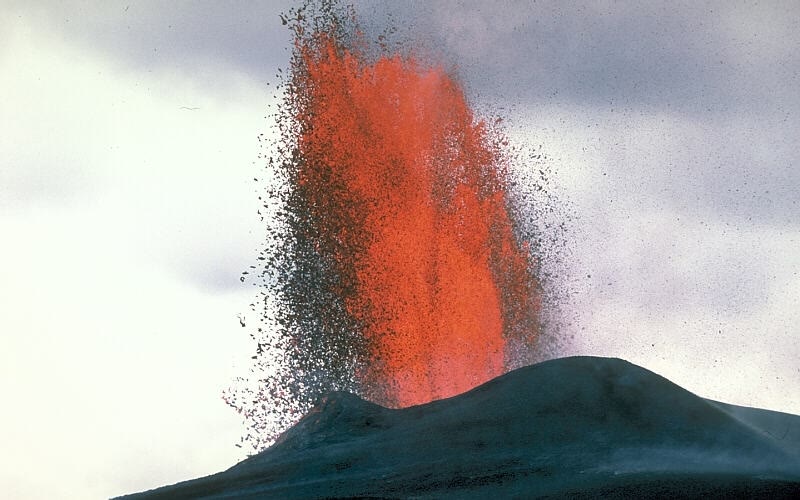
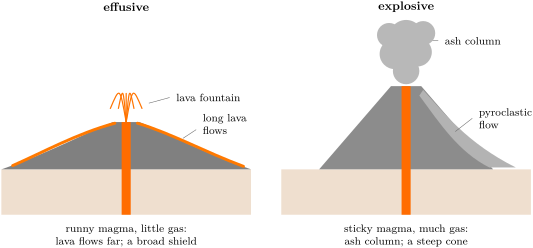
In an effusive eruption the magma comes out quietly as lava, which flows away from the vent, sometimes for kilometres, or spurts up in fountains of glowing drops. In an explosive eruption the magma is blown to pieces by its own gas: a column of ash, gas and lumps of rock is thrown high into the sky.
উদাহরণ
Example 19.6 (Pinatubo, 1991: the flat soda and the shaken one)
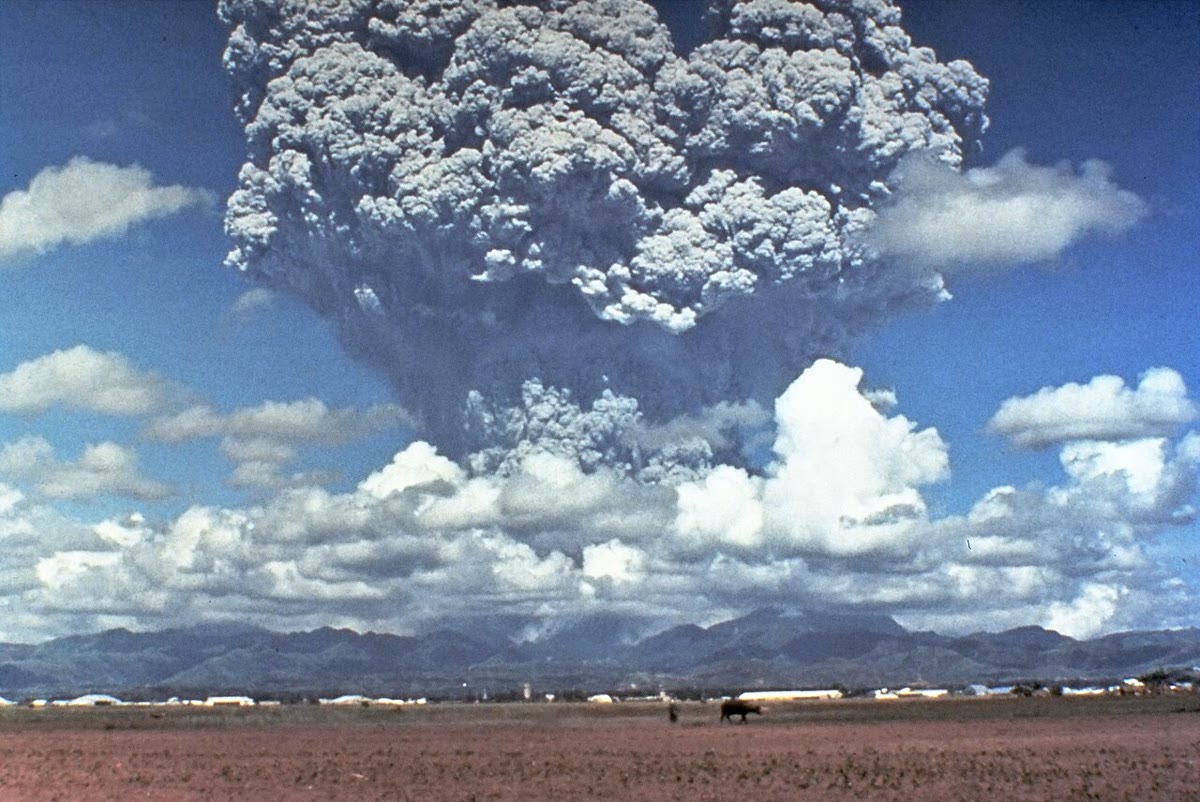
In June 1991 the first magma reached the surface of Mount Pinatubo, in the Philippines. On its way up it had lost most of its gas, “like a bottle of soda pop gone flat”, in the words of the scientists who were watching. It oozed out slowly and piled up into a mound over the vent: no explosion. Then, on 12 June, magma still full of gas reached the surface and exploded — the column in the photograph above. On 15 June, even more gas-rich magma arrived, and the volcano had one of the largest eruptions of the twentieth century: it threw out more than five cubic kilometres of rock and ash, its ash cloud rose high, and the top of the mountain collapsed into a hollow across. The same volcano, the same week: the gas made the difference.
Example 19.8 (Using the clues)
A traveller describes a volcano: “a huge, gently rounded mountain, black lava flows everywhere on its slopes, some of them only a few years old”. Clue 2 (gentle slopes) and clue 4 (dark lava flows) both point to effusive eruptions: it is a shield volcano, like Mauna Loa.