All books

Professional

Apps About Coach Log in Start reading

Earth and Space Sciences · Glossary

What is Eruption, lava and volcanic ash?

Also known as: eruption · lava · volcanic ash

Definition 8.2 Primary & Middle School Earth and Space Sciences · Chapter 8 — Volcanoes and Earthquakes: A First Look

An eruption is the time when a volcano throws out molten rock, ash and gas. Lava is molten rock that pours out onto the surface; it flows, then cools and hardens into new rock. Volcanic ash is made of tiny pieces of rock and glass blown into the air by an eruption; it falls back like a grey snow.
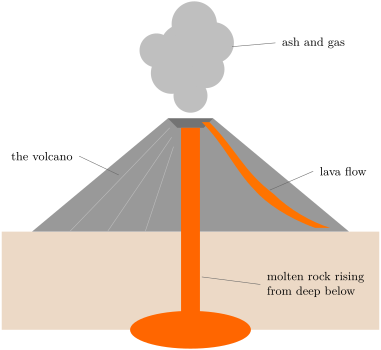
A volcano erupting (drawn, not to scale). Molten rock rises from deep below and comes out at the top: it flows down as lava, while ash and gas are blown up into the sky. Each eruption adds a new layer to the mountain.
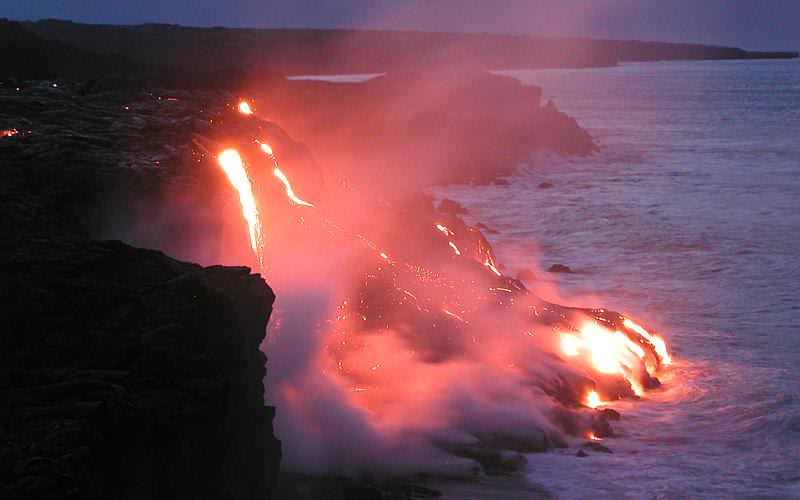
A runny eruption: lava pours down a sea cliff into the ocean, in Hawaii. Photograph: USGS Hawaiian Volcano Observatory (public domain).
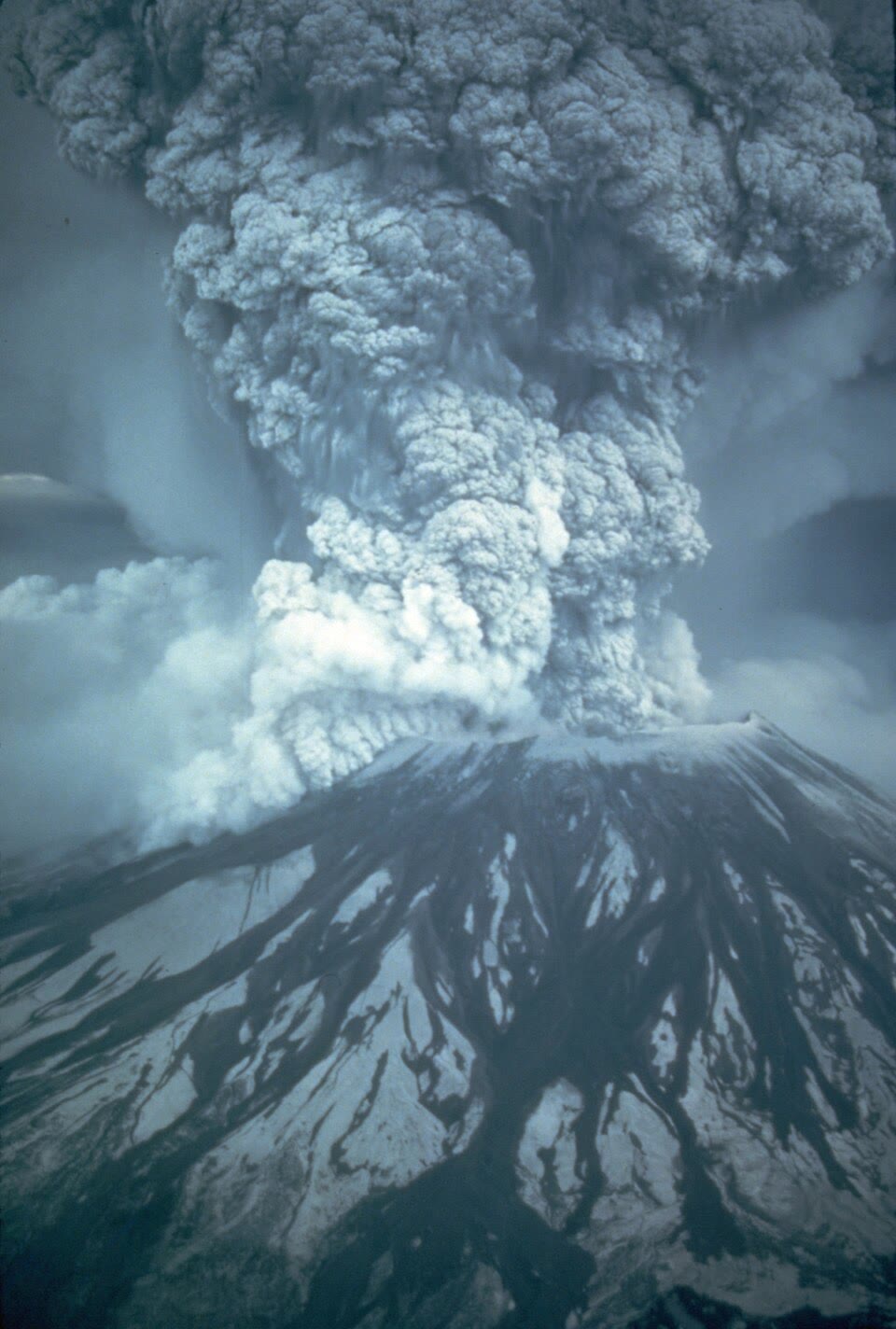
An explosive eruption: Mount St. Helens, United States, 18 May 1980. Photograph: Austin Post, USGS (public domain).

Examples

Example 8.3 (Mount St. Helens, 1980)

In the spring of 1980, a bulge grew on the side of Mount St. Helens, as molten rock pushed up inside the mountain. On the morning of 18 May, a small earthquake shook the mountain, the bulge slid away in a giant landslide, and the volcano exploded sideways and upwards. The top 400 metres of the mountain were gone: the summit became a huge crater.

Read in context →