Coach
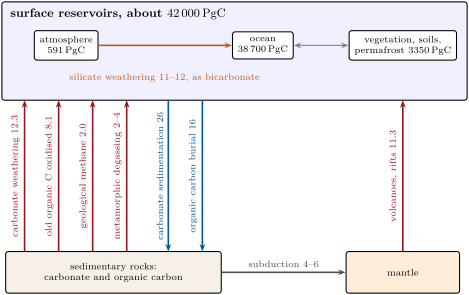
The long-term carbon cycle is the exchange of carbon between the surface reservoirs (atmosphere, ocean, biosphere and soils) and the solid Earth: volcanic and metamorphic degassing, the weathering of rocks, and the burial of carbonate and organic carbon in sediments that later become rock or are subducted. Its fluxes are small against the surface reservoirs and act over to years. The carbonate–silicate cycle is its inorganic part: carbon dioxide leaves the mantle and the crust at volcanoes, is consumed by the weathering of silicate rocks, is deposited on the sea floor as carbonate, and returns to the surface when that carbonate is metamorphosed or subducted and degassed.