 Coach
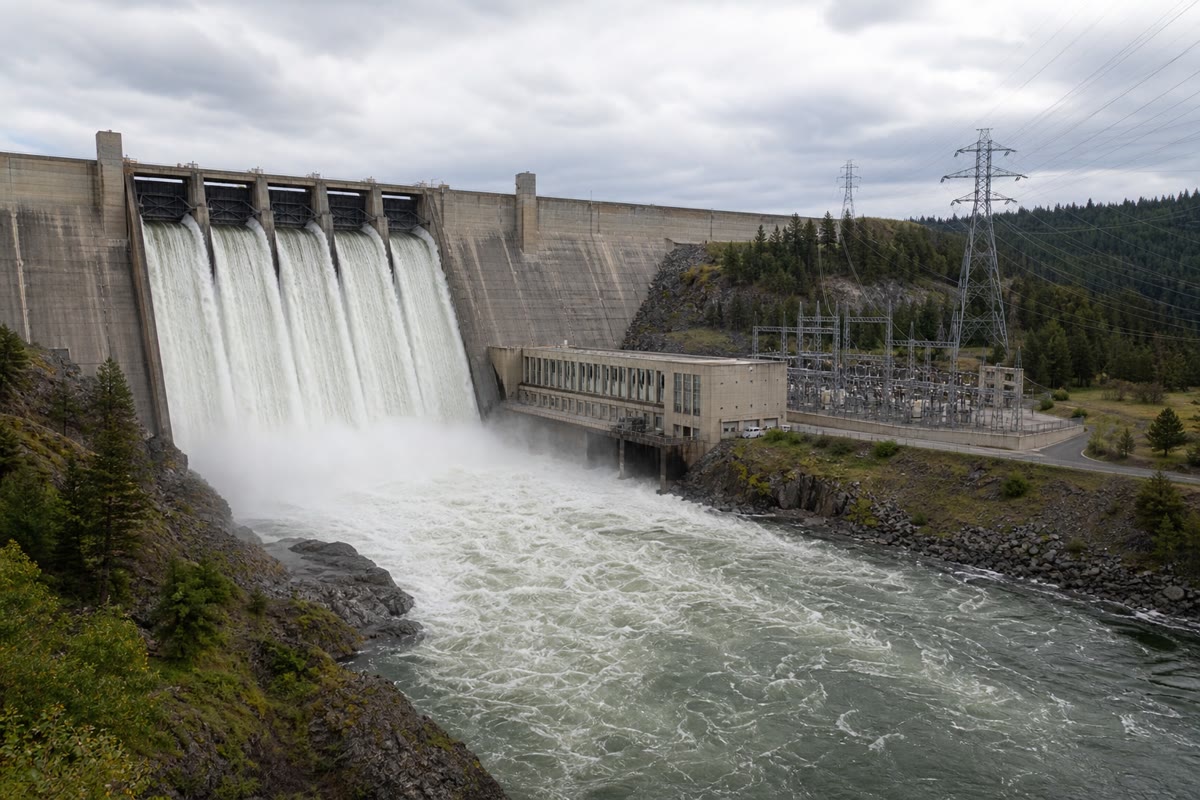
CoachAn alternator is induction made tireless: a magnet spun steadily beside a fixed coil (or a coil spun in a magnetic field). Each half-turn brings a pole toward the coil, then carries it away — change, endlessly renewed — so the induced voltage swings positive, negative, positive: alternating, by construction, tracing exactly the smooth sinusoid of the oscilloscope chapter. Spin at fifty turns a second and the output alternates at : the grid’s frequency is a rotation speed, kept in lockstep by every station on the network.
Examples
Example 69.4 (The dynamo on your wheel)
The bicycle dynamo is a pocket alternator: the wheel spins a little magnet inside a fixed coil, and the lamp lights — brighter and at higher frequency as you pedal harder, exactly as the bench rules promise (and flickering at a crawl, as the alternating chapter observed). Its price is honest too: the dynamo drags — lighting the lamp costs your legs real effort. Induction gives no energy; it converts motion into electricity, joule for joule, minus friction’s tax.