 Coach
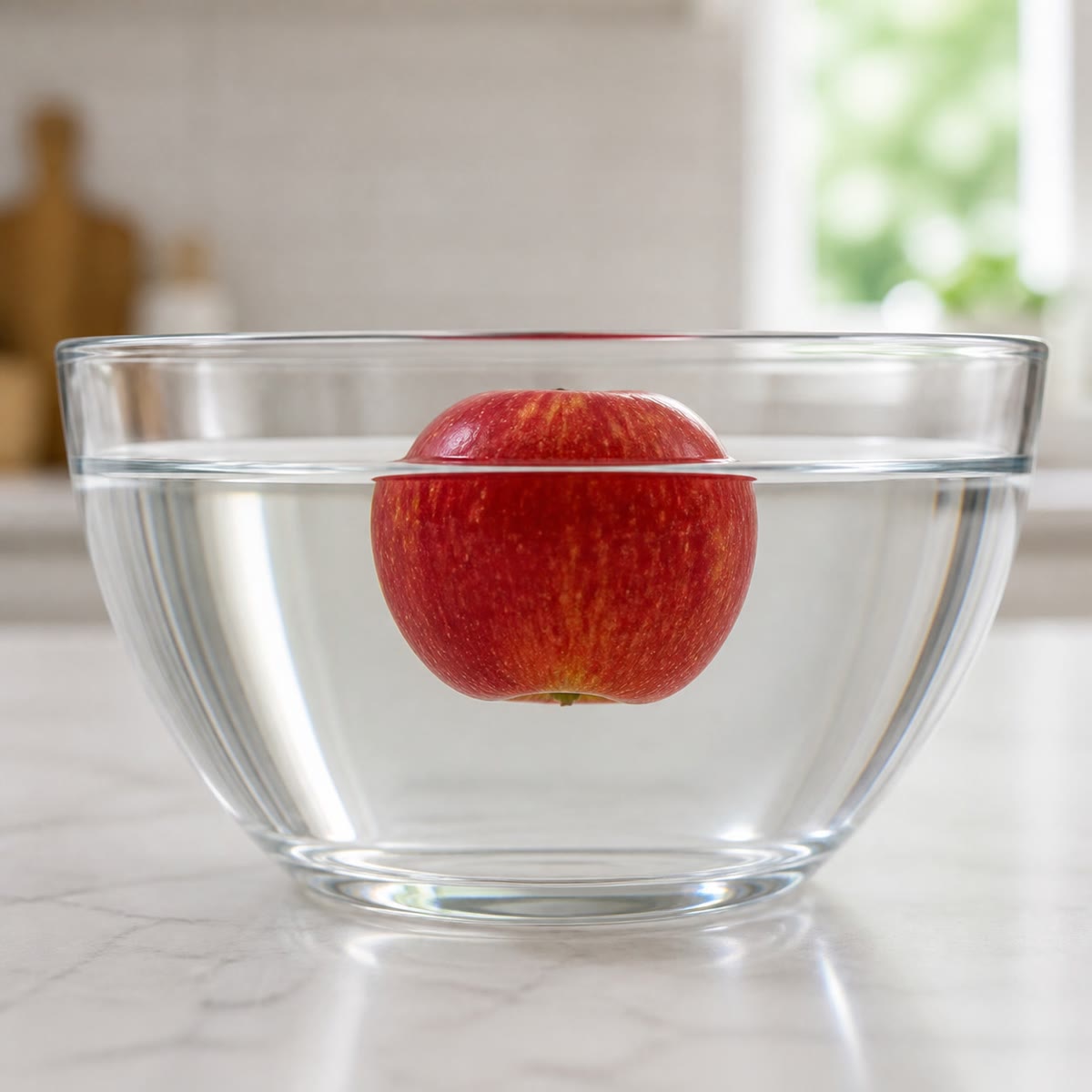
CoachA thing floats when the water holds it up at the top; it sinks when it goes down to the bottom. A cork floats; a pebble sinks.
Examples
Example 5.3 (Try it: the sorting game)
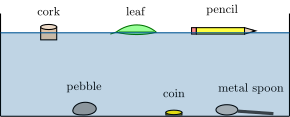
Gather a cork, a coin, a plastic spoon, a metal spoon, a pebble, a pencil and a dry leaf, and test them one by one with Method 5.2. Floaters: the cork, the plastic spoon, the pencil, the leaf. Sinkers: the coin, the metal spoon, the pebble. Before each drop, say your guess out loud — that is what scientists call a prediction, and being wrong is half the fun.
Example 5.4 (The log and the coin)
A fallen tree trunk is far too heavy for you to lift — yet it floats down the river. A little coin weighs less than a cookie — yet it sinks straight away. So heavy-or-light cannot be the whole rule: the huge log floats while the tiny coin drowns.
Example 5.5 (It is the stuff that counts)
Look back at the sorting game: the plastic spoon floated and the metal spoon sank, though they have the same shape and the same job. What made the difference is the stuff they are made of — wood and cork and most plastics are floating stuffs; metal, stone and glass are sinking stuffs. A thing usually behaves like its stuff: wood floats whether it is a twig or a whole trunk.