 Coach
CoachFor a PPH wave along the field in a plane const is
and the tip of describes, in general, an ellipse: elliptical polarization. Two special cases: or , linear polarization along a fixed direction at angle from ; and , circular polarization, of constant modulus turning at (right or left according to its sense of rotation, seen facing the oncoming wave). Natural (unpolarized) light, from a lamp or the Sun, is a succession of short wave trains with random, rapidly changing polarizations: no direction is preferred on average. Any polarization decomposes into two linear (or two circular) components.
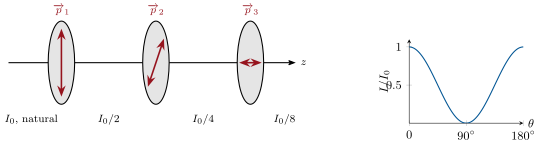
Examples
Example 13.5 (Sunglasses, screens, photographs)
Light reflected at a glancing angle from water or asphalt is largely polarized horizontally (Brewster’s angle, Chapter 15): sunglasses with a vertical transmission axis cut the glare and keep the rest. A liquid-crystal screen emits polarized light: through a polarizer at it goes black. A photographer’s polarizing filter darkens the sky (scattered light is partly polarized, Chapter 17) and removes reflections from glass.
Example 13.7 (Where plates are used)
A quarter-wave plate between a polarizer and a mirror makes an optical isolator: the light goes out circular, comes back circular of the opposite handedness, is turned by the plate into linear light at from the polarizer and is absorbed — no reflection returns to the laser. The two eyes’ images of a 3D film are projected in opposite circular polarizations and sorted by the quarter-wave–polarizer sandwiches of the glasses, which still work when you tilt your head (linear polarizers would not). A transparent ruler between crossed polarizers shows coloured fringes: stress makes plastic birefringent, and engineers read the stresses of a model from the pattern.