 Coach
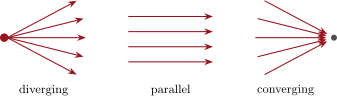
CoachA light ray is the physicist’s drawing of one thread of light: a straight line with an arrow for its direction of travel. Real lamps pour out countless threads together: a bundle of rays is a beam. Three beam shapes cover practice: diverging (rays spreading from a point — any small lamp), parallel (rays side by side, neither meeting nor parting — sunlight, having traveled so far), and converging (rays closing toward a point — light gathered by instruments you will meet in two years).
Examples
Example 42.3 (The law at work, everywhere)
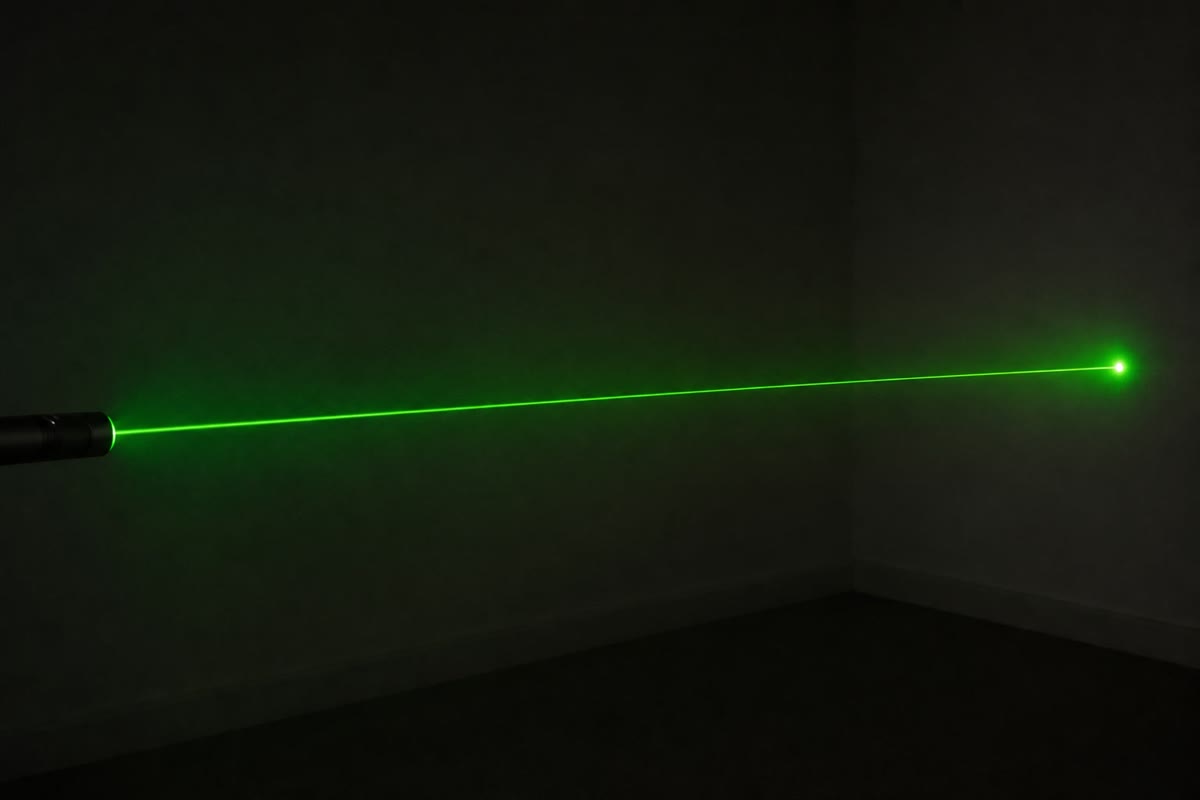
Builders sight along a straight plank’s edge to judge it — eye, edge and far end must line up, and light’s straightness is the judge’s oath. Surveyors set poles in a line by eye; archers and photographers “line up the shot”; and the three-cards experiment of two years ago now has a formal name: a test of rectilinear propagation. Every one of these trades a straight line of light for a straight line of matter.