Coach
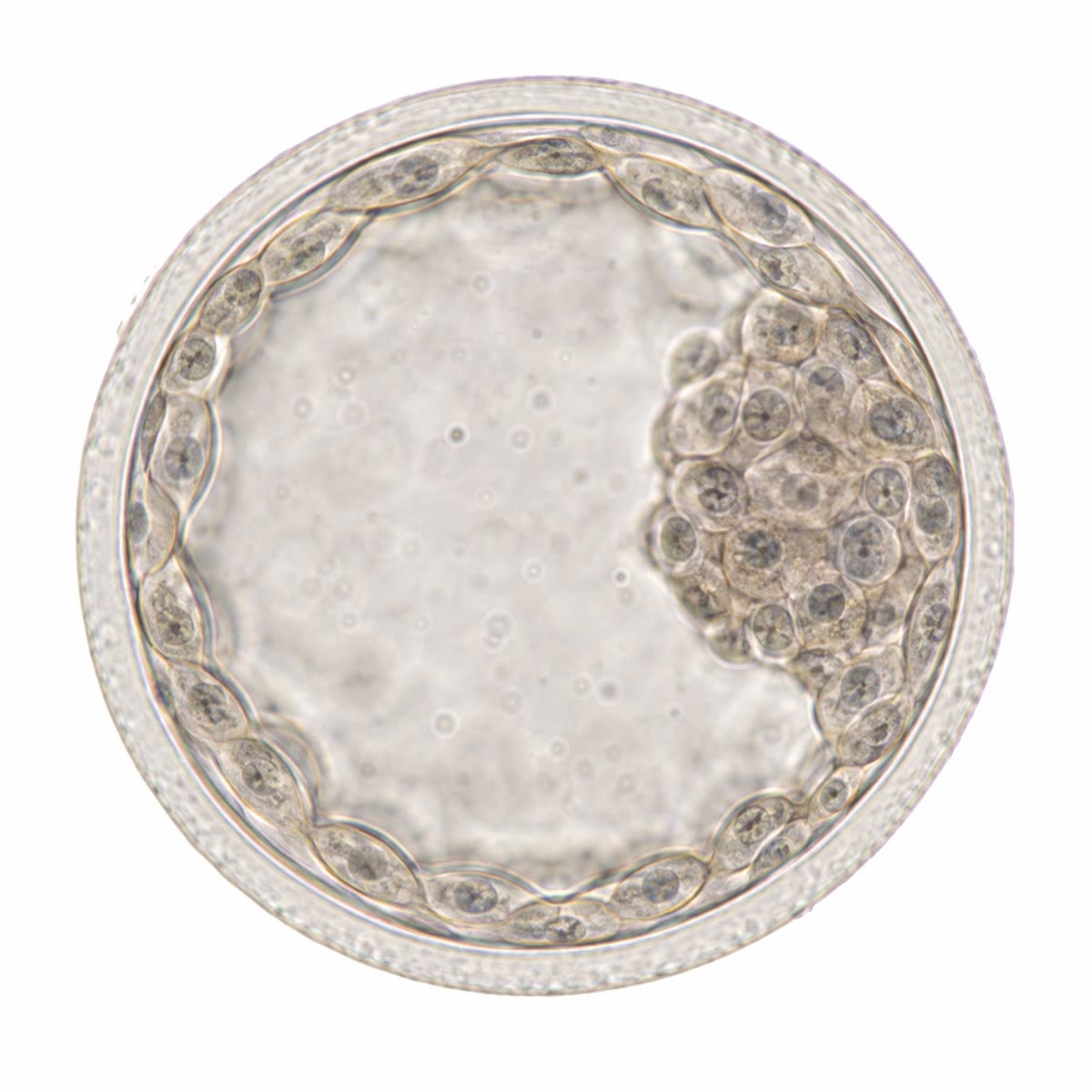
CoachThe zygote divides every twelve to twenty hours without growing (cleavage) as it is moved down the oviduct: two cells, four, eight, a compact ball of sixteen (morula), and by day five a blastocyst of about a hundred cells: an outer layer, the trophoblast, around a cavity, with a clump of cells at one side, the inner cell mass. The trophoblast will build the placenta and membranes; the inner cell mass will become the embryo — and, taken out at this stage, gives embryonic stem cells. On day six the blastocyst hatches from its zona, sticks to the lining of the uterus, and the trophoblast invades it: cells fuse into a multinucleate front that digests maternal tissue and opens maternal capillaries, so that by day twelve the embryo is buried in the wall and bathed in maternal blood. This is implantation. It succeeds only in a uterus prepared by progesterone, in a window of a few days; about half of all human conceptions fail before or at this step, usually from chromosomal errors of the egg.