 Coach
CoachSome young animals look nothing like their parents, and must change their whole body shape to become adults. That great change is called metamorphosis. The tadpole becomes a frog; the caterpillar becomes a butterfly.
Examples
Example 8.7 (The frog’s road)
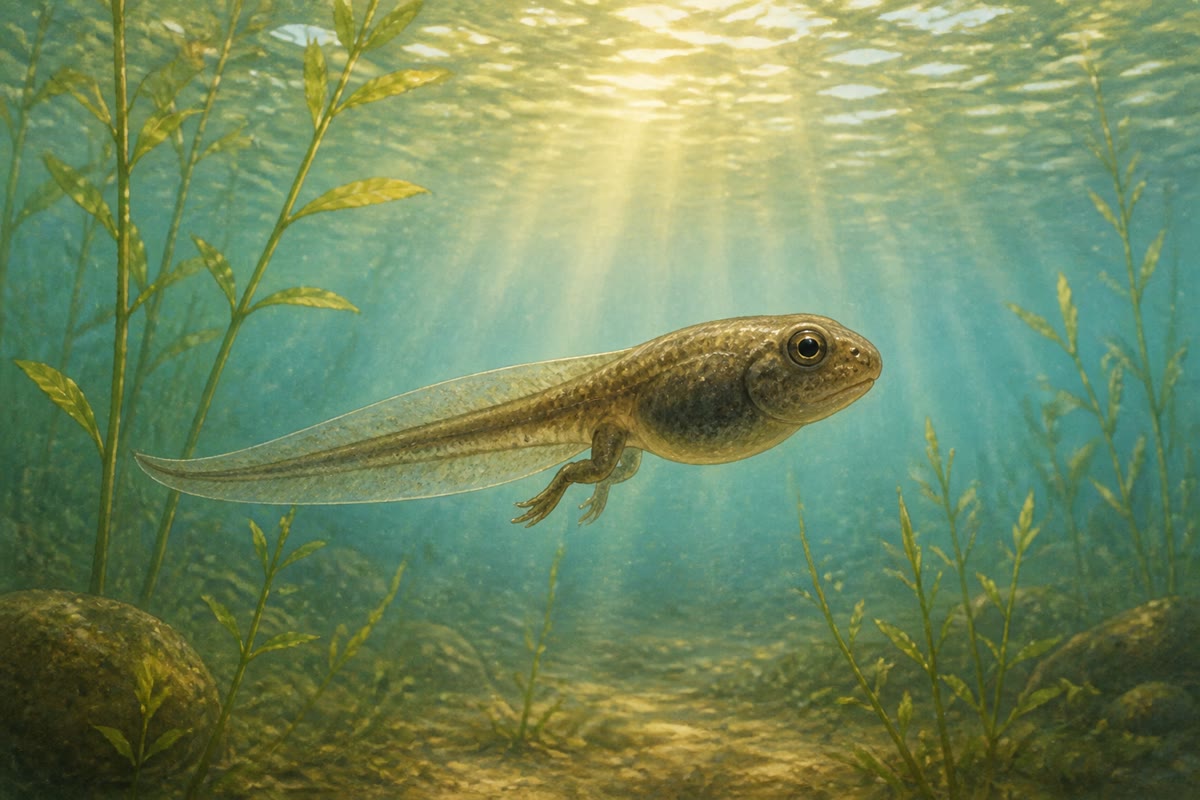
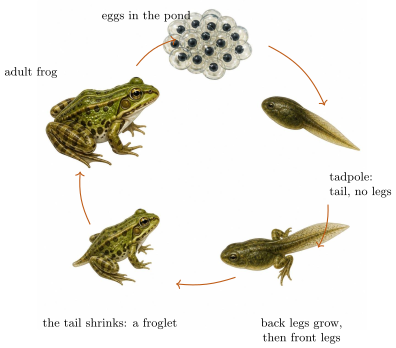
From the frog’s eggs in the pond hatch tadpoles: round-headed, long-tailed, legless, breathing in water like fish. Then, week by week: back legs appear, then front legs; the tail shrinks away; and one day a small frog climbs out onto the bank. Same animal — rebuilt.
Example 8.8 (The butterfly’s road)
From the butterfly’s egg hatches a caterpillar, which does little but eat leaves and grow. One day it wraps itself in a case, the chrysalis, and stops moving. Inside, the body is rebuilt; after some weeks the case splits, and out climbs a butterfly, unfolding wet new wings. Egg, caterpillar, chrysalis, butterfly: four stages of one and the same animal.