Coach
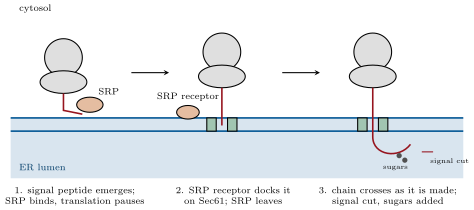
CoachA sorting signal is a segment of a protein, or a modification of it, read by a receptor that delivers the protein to one compartment. The signal peptide, a stretch of residues at the amino terminus with a hydrophobic core, sends a protein into the endoplasmic reticulum as it is being made; from there the default route leads through the Golgi to the plasma membrane or the outside, and further signals divert to the lysosome (a phosphorylated sugar) or back to the reticulum (the carboxy-terminal sequence KDEL). A nuclear localisation signal, a short basic patch such as PKKKRKV, is bound by importins that carry the folded protein through the nuclear pore; a mitochondrial presequence, an amphipathic helix of residues, is recognised by receptors on the outer membrane and threaded, unfolded, through translocases of both membranes; peroxisomal enzymes end in SKL. Proteins with none of these stay in the cytosol. Every signal was found the same way: deleting it leaves the protein in the cytosol, grafting it onto a cytosolic protein sends that protein to the compartment.