Coach
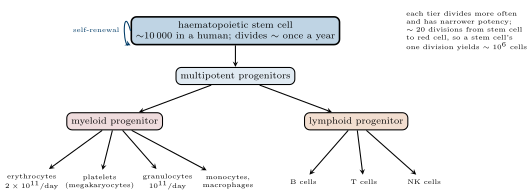
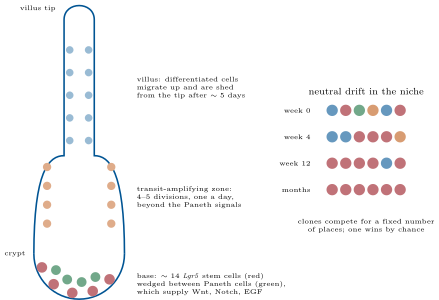
CoachA stem cell has two defining properties: it can self-renew, producing daughters that are stem cells, and it can produce daughters that differentiate. It may do both at once, by asymmetric division, one daughter of each kind, with the fate decided by unequal inheritance of determinants or by which daughter stays in contact with the niche — the microenvironment of neighbouring cells, matrix and signals that keeps a cell a stem cell; or it may divide symmetrically, some divisions giving two stem cells and others two differentiating cells, with the population held constant on average. The differentiating daughters usually pass through progenitor or transit-amplifying stages, dividing several more times with narrowing potency before they mature: the hierarchy amplifies a few slow stem-cell divisions into a large output, and limits the number of divisions any stem cell must make. Adult stem cells are rare and slow — a haematopoietic stem cell divides perhaps once a year, an intestinal stem cell once a day — and multipotent, confined to the lineages of their tissue; embryonic stem cells, from the inner cell mass of the blastocyst, are pluripotent, able to make every tissue of the body but not the placenta.