 Coach
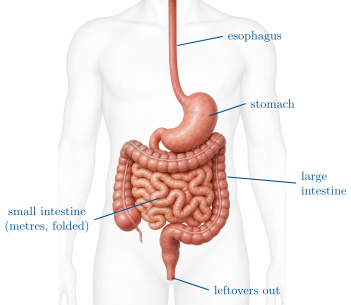
CoachFood travels through the digestive tract, one long tube running right through the body:
- the mouth, where teeth grind (Chapter 12) and saliva moistens;
- the esophagus, the slide from throat to stomach;
- the stomach, a muscular pouch where food is churned and mixed with digestive juices for hours;
- the small intestine, a folded tube several metres long, where digestion finishes and the food’s goodness passes into the body;
- the large intestine, where water is reclaimed from what remains, before the leftovers leave the body.
Examples
Example 25.2 (Timing the journey)
The bite of bread spends seconds in the mouth, a couple of seconds sliding down the esophagus, some hours being churned in the stomach, several more working through the small intestine, and up to a day or more finishing in the large intestine. The whole journey commonly takes one to two days.
Example 25.4 (The bread turns sweet)
Chew a piece of plain bread very long — a slow count of sixty — and a faint sweetness appears. Nothing was added: saliva is already dismantling the bread into simpler, sweeter pieces. You have tasted digestion beginning.
Example 25.8 (The stomach-ache detective)
Wolfed-down lunch, then a sprint: the classic afternoon stomach ache. The meal was swallowed half-chewed (rule 1 broken) and the digesting stomach was hurried into a race (rule 5). The fix is not medicine but manners — toward one’s own digestive tract.