
সব বই

পেশাদার

1 Markets I: The Ecosystem and Exchange-Traded Marketsবাজার অনলাইন 2 Markets II: Rates, FX and Creditবাজার অনলাইন 3 Markets III: Commodities, Energy and Cryptoবাজার অনলাইন 4 Quantitative Methodsপদ্ধতি অনলাইন 5 Derivatives and Volatilityডেরিভেটিভস অনলাইন 6 Rates, Credit, XVA and Riskসুদহার, ঋণ ও ঝুঁকি অনলাইন 7 Research Craft: Predictors, Backtests, Measurement, Portfoliosগবেষণা অনলাইন 8 Strategies I: Equities and Futuresকৌশল অনলাইন 9 Strategies II: Volatility, Relative Value, Macro and the Bank Desksকৌশল অনলাইন 10 Microstructure and Executionএক্সিকিউশন অনলাইন 11 Market Making and High-Frequency Tradingমার্কেট মেকিং অনলাইন 12 Machine Learning for Marketsমেশিন লার্নিং অনলাইন 13 Low-Latency Softwareপ্রযুক্তি অনলাইন 14 Networks, Hardware and Trading Infrastructureপ্রযুক্তি অনলাইন 15 Research, Data and Risk Platformsপ্রযুক্তি অনলাইন 16 The Desk and the Firmপ্রতিষ্ঠান অনলাইন 17 The Industry: Firms, Roles and Careersক্যারিয়ার অনলাইন 18 Interviews I: Maths, Probability and Speedক্যারিয়ার অনলাইন 19 Interviews II: Markets, Trading Games and the Final Roundক্যারিয়ার অনলাইন 20 Interviews III: Codeক্যারিয়ার অনলাইন
অ্যাপ পরিচিতি Coach সাইন ইন পড়া শুরু করো

বইগুলো এখনো বাংলা ভাষায় পাওয়া যায় না — ইংরেজি সংস্করণ দেখানো হচ্ছে।

Chemistry · পরিভাষা

Air কী?

Definition 4.3 School Chemistry — Grades 1 to 12 · অধ্যায় 4 — Air, a Mixture of Gases

Air is the mixture of gases that surrounds the Earth. It is not one single gas: several gases are mixed in it, and they can be separated from one another.
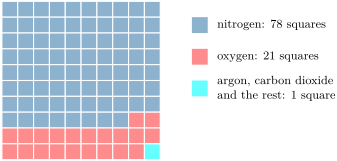
One hundred squares of dry air. The square at the bottom right holds the argon, and the carbon dioxide too small to draw on its own.

উদাহরণ

Example 4.5 (One hundred bottles of air)

Imagine 100 bottles of dry air, and the gases of the air sorted into separate bottles. About 78 bottles would hold nitrogen, 21 bottles oxygen, and the last bottle argon, with a few drops’ worth of carbon dioxide and other gases.

Example 4.1 (An upturned glass)

A dry paper tissue is pushed to the bottom of an empty glass. The glass is turned upside down and pushed straight down into a bowl of water. When it is lifted out again, the tissue is still dry. The glass was not empty: it was full of air, and the air kept the water out.

Example 4.8 (A crowded room)

In a small classroom with the windows shut, thirty people breathe out carbon dioxide all morning. Little by little the air of the room holds less oxygen and more carbon dioxide, and people feel tired. Opening the windows brings fresh air back in.

প্রসঙ্গসহ পড়ো →