 Coach
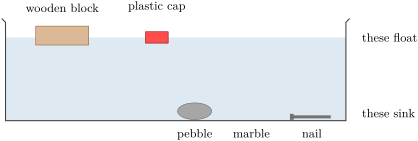
CoachA property of a material is something we can find out about it by looking, touching or testing: is it hard or soft? Can we see through it? Does a magnet pull it? Does it float on water or sink?
Examples
Example 1.9 (Hard and soft)
A pebble is hard: pressing it with a thumb leaves no mark. A wool scarf is soft: it bends and folds in the hand. Wood, metal, glass and stone are hard; fabric and paper are soft and bend easily.
Example 1.10 (Seeing through)
We can see the garden through a window: glass lets light through, we say it is transparent. We cannot see through a wooden door, a brick wall or a metal pan. Some plastics are transparent, like a water bottle; others are not, like a red toy brick.
Example 1.11 (Attracted by a magnet)
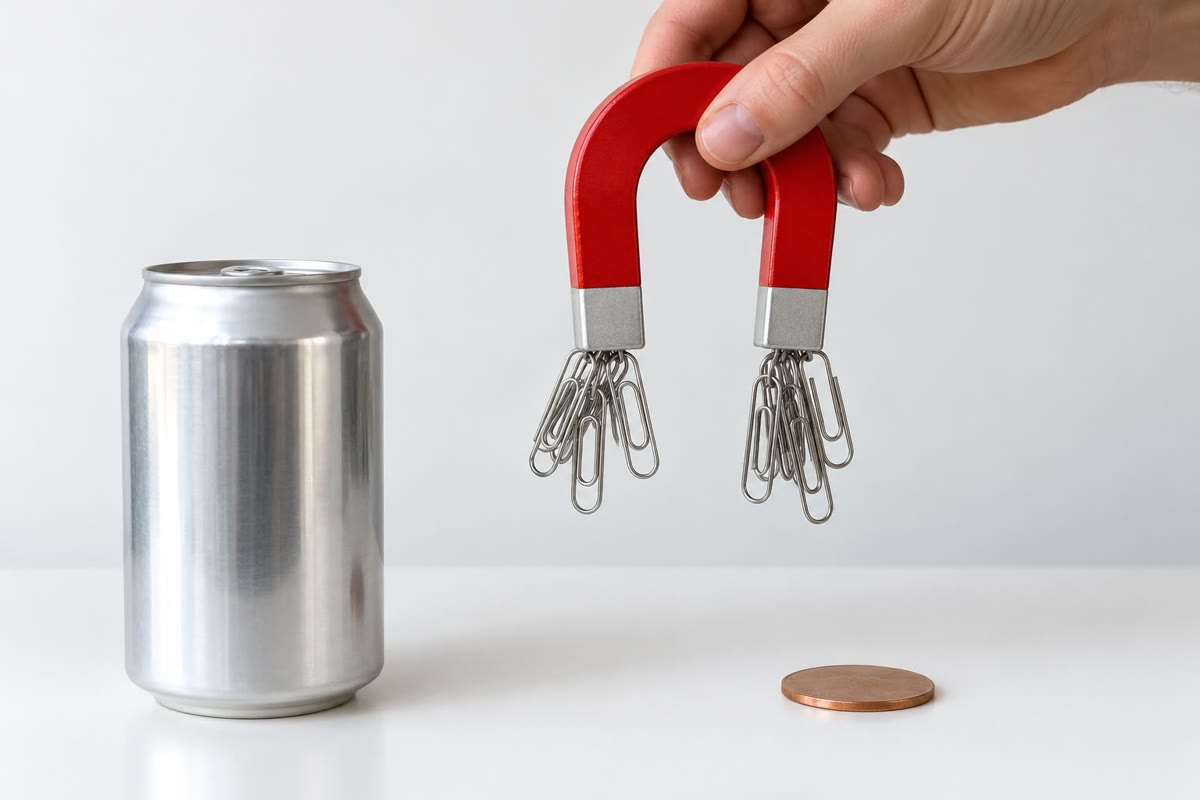
A magnet pulls a steel paper clip, a steel nail or an iron key towards it. It does not pull wood, glass, plastic, paper, fabric or stone. And, surprisingly, it does not pull every metal: a drink can of aluminium and a copper wire stay where they are. A magnet attracts objects made of iron and of steel, which is mostly iron.