 Coach
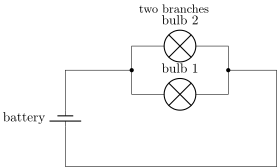
CoachPlayers are in parallel when the circuit splits into separate branches — one player per branch — that fork apart and rejoin. The points where roads fork or rejoin are called junctions. Each branch is a complete road from one battery terminal to the other.
Examples
Example 30.4 (The unscrewing test, replayed)
Do to the parallel pair exactly what once killed the series pair: unscrew bulb 2. Bulb 1 does not even flicker — its own branch, its own complete road, is untouched. Screw it back, unscrew bulb 1 instead: bulb 2 burns calmly on. The curse of the single loop is lifted: in parallel, every player minds its own branch.
Example 30.5 (Your house is a parallel circuit)
Every lamp, socket and appliance in your home rides its own branch of one great parallel circuit. That is why the kitchen bulb can burn out while the living room reads on undisturbed; why each room’s switch commands only its own light; and why one main switch — in the fuse box by the meter — can cut the whole house at once for repairs. Modern party lights joined the club: their bulbs are wired so one dead bulb no longer darkens the string.