 Coach
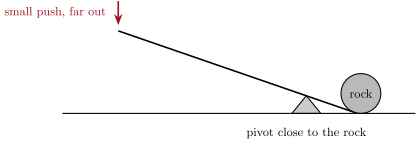
CoachA lever is a stiff bar resting on a support point around which it can tip. The support point is called the pivot. A seesaw is a lever; so is a crowbar under a rock, and the claw of a hammer pulling a nail.
Examples
Example 17.2 (The strength multiplier)
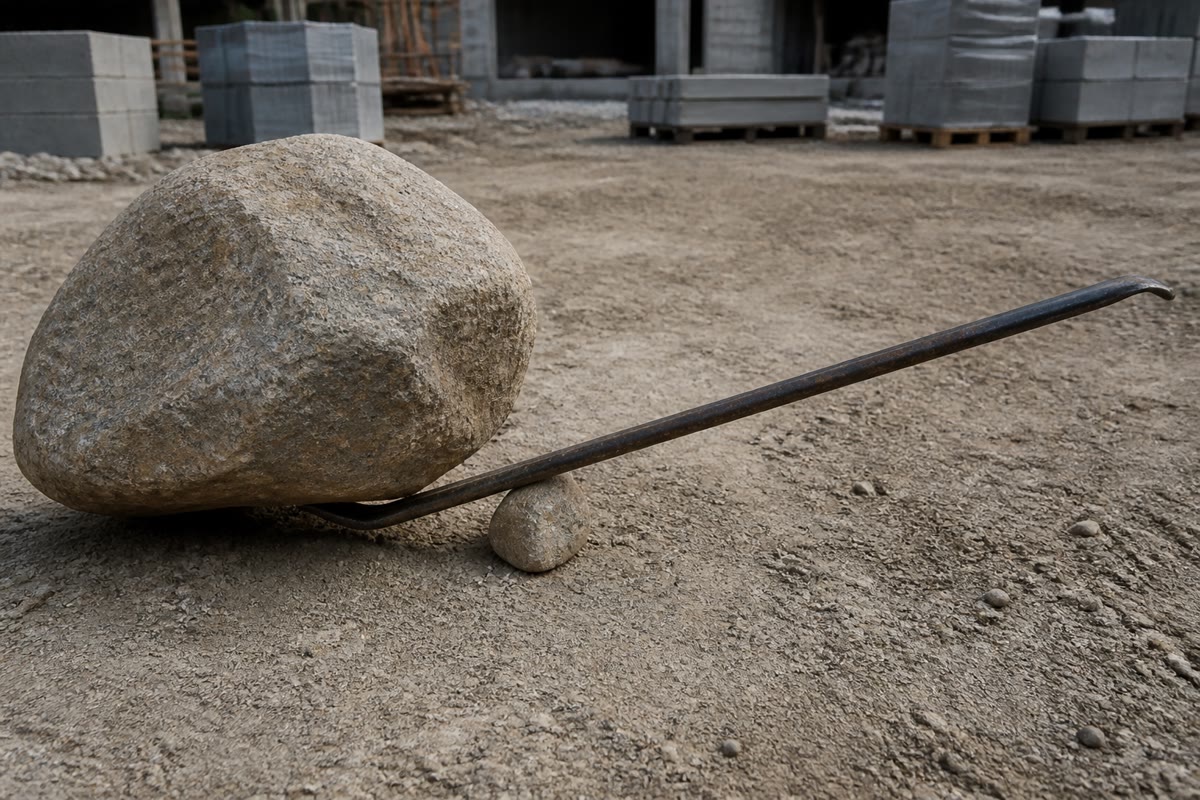
A gardener slides a long iron bar under a boulder, rests it on a log close to the boulder, and presses down on the far end — and the boulder, which ten hands could not lift, tips over gently. The lever’s secret is distance: press far from the pivot, and your small push does the work of a giant close to it. An old story says a great scientist of antiquity boasted: “Give me a place to stand, and a lever long enough, and I shall move the Earth.”