
সব বই

পেশাদার

1 Markets I: The Ecosystem and Exchange-Traded Marketsবাজার অনলাইন 2 Markets II: Rates, FX and Creditবাজার অনলাইন 3 Markets III: Commodities, Energy and Cryptoবাজার অনলাইন 4 Quantitative Methodsপদ্ধতি অনলাইন 5 Derivatives and Volatilityডেরিভেটিভস অনলাইন 6 Rates, Credit, XVA and Riskসুদহার, ঋণ ও ঝুঁকি অনলাইন 7 Research Craft: Predictors, Backtests, Measurement, Portfoliosগবেষণা অনলাইন 8 Strategies I: Equities and Futuresকৌশল অনলাইন 9 Strategies II: Volatility, Relative Value, Macro and the Bank Desksকৌশল অনলাইন 10 Microstructure and Executionএক্সিকিউশন অনলাইন 11 Market Making and High-Frequency Tradingমার্কেট মেকিং অনলাইন 12 Machine Learning for Marketsমেশিন লার্নিং অনলাইন 13 Low-Latency Softwareপ্রযুক্তি অনলাইন 14 Networks, Hardware and Trading Infrastructureপ্রযুক্তি অনলাইন 15 Research, Data and Risk Platformsপ্রযুক্তি অনলাইন 16 The Desk and the Firmপ্রতিষ্ঠান অনলাইন 17 The Industry: Firms, Roles and Careersক্যারিয়ার অনলাইন 18 Interviews I: Maths, Probability and Speedক্যারিয়ার অনলাইন 19 Interviews II: Markets, Trading Games and the Final Roundক্যারিয়ার অনলাইন 20 Interviews III: Codeক্যারিয়ার অনলাইন
অ্যাপ পরিচিতি Coach সাইন ইন পড়া শুরু করো

বইগুলো এখনো বাংলা ভাষায় পাওয়া যায় না — ইংরেজি সংস্করণ দেখানো হচ্ছে।

Physics · পরিভাষা

Sound কী?

Definition 19.2 Primary & Middle School Physics · অধ্যায় 19 — Sound Around Us

A sound is what we hear when something vibrates and its trembling travels through the air to our ears. The vibrating thing is the sound’s source — a string, a drum skin, a bell, your own throat.
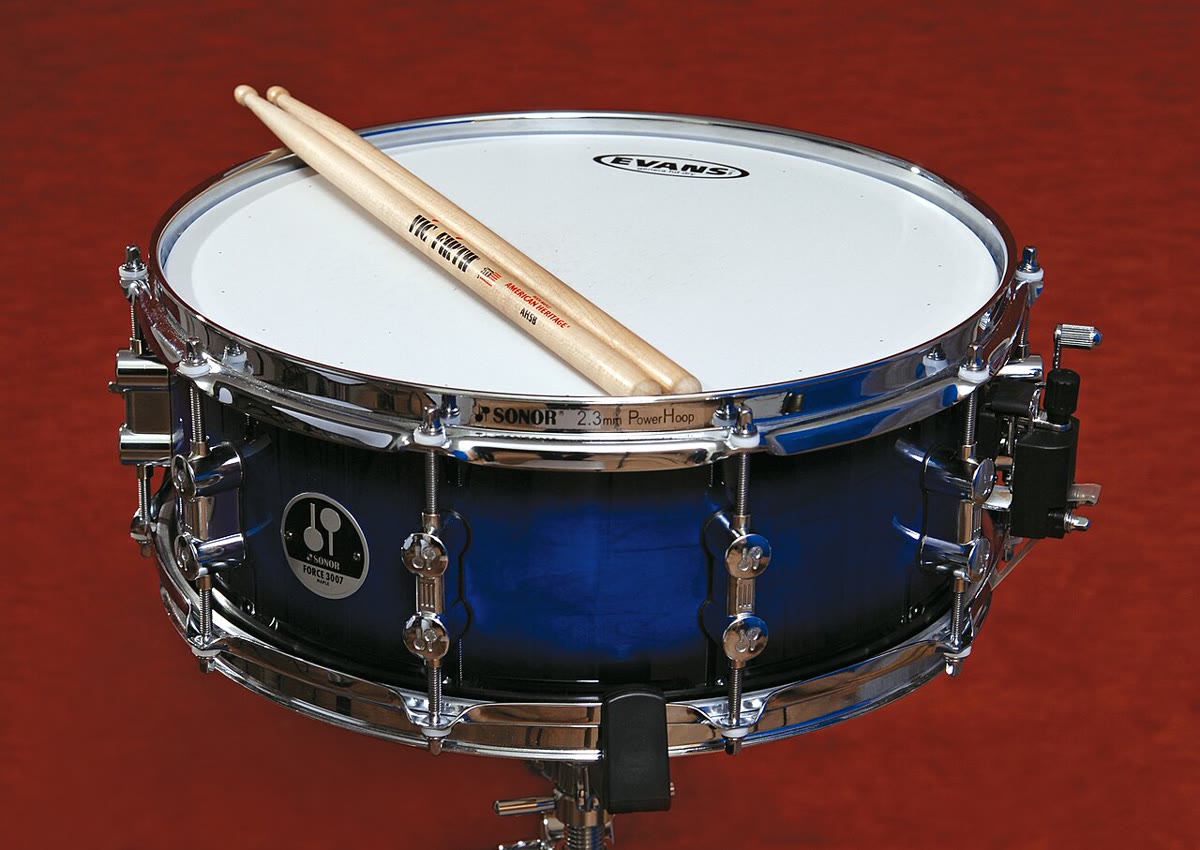
A real drum for the rice experiment: the white skin is the part that trembles. Scatter a few grains on it, tap near them — a sounding skin is a trembling skin, and the rice dances to prove it. Photo: Vladimir Morozov, CC BY 2.0.

উদাহরণ

Example 19.5 (Sound sources everywhere)

Hunt the vibration behind each sound: the guitar — plucked strings tremble; the drum — the struck skin trembles; your voice — two little folds in your throat tremble as air from your lungs rushes past (that is the buzz your fingers felt); the buzzing fly — its wings tremble hundreds of times a second; the slammed door — the whole door and its frame shudder for a moment.

Example 19.6 (Loud is a big trembling)

Pluck a stretched rubber band gently: a small blur, a quiet twang. Pluck it hard: a wide blur, a loud twang. The harder the source trembles — the wider its back-and-forth — the louder the sound. Watch the rice grains too: a gentle tap makes them shiver, a mighty boom throws them in the air.

Example 19.9 (The journey of a clap)

A friend claps across the playground. The clap sets the air trembling; the trembling spreads out through the air in every direction, like the rings around a pebble dropped in a pond; some of it reaches your ear and sets your ear’s little skin trembling — and you hear the clap. Source, journey, ear: every sound you have ever heard made this trip. How fast is the journey, and what can it travel through? Next year’s sound chapter takes exactly those questions.

প্রসঙ্গসহ পড়ো →
Definition 8.9 High School Physics · অধ্যায় 8 — Signals and Waves

Sound is a pressure signal: a vibrating object — string, membrane, vocal cords — pushes rhythmically on the air, and the compressions travel outward at about 340 m/s340\,\mathrm{m}/\mathrm{s}. A microphone converts the arriving pressure into a voltage; the eardrum, into nerve impulses. Sound needs a medium: a bell rung under a vacuum jar falls silent as the air is pumped out.

প্রসঙ্গসহ পড়ো →